Inspiration
Past Perfect: Inside a House-Studio
Inspiration
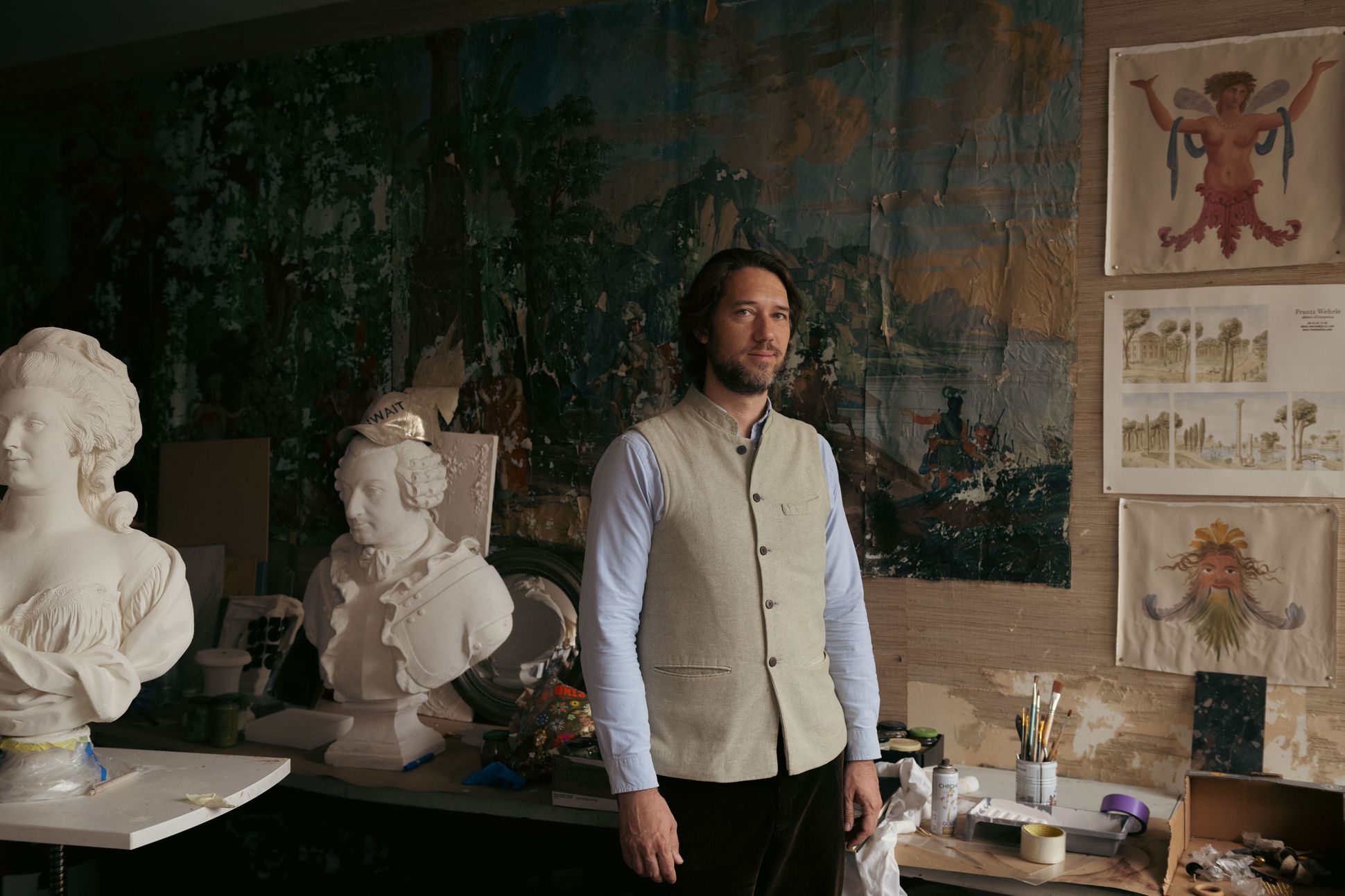
Frantz Wehrlé
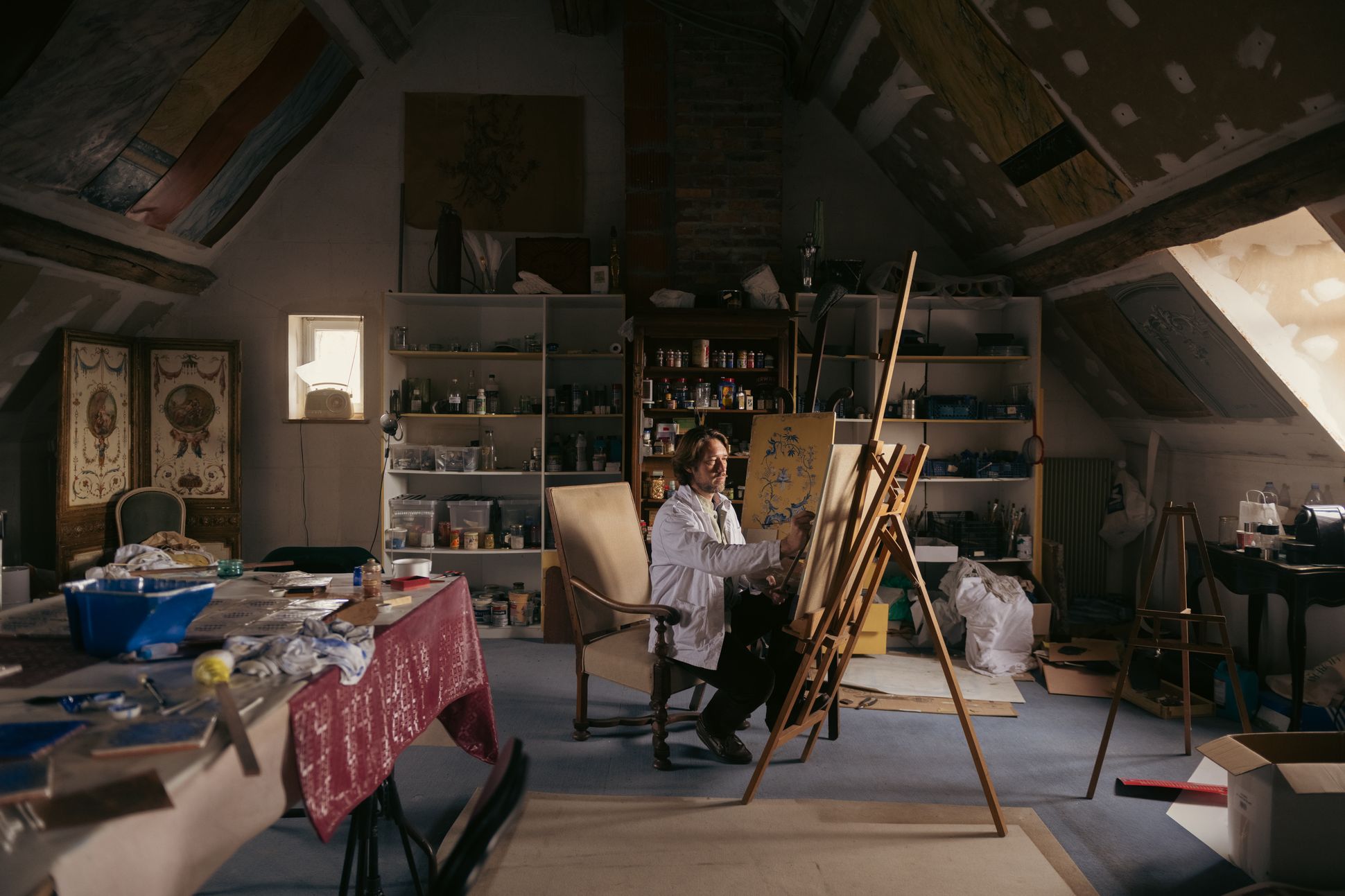
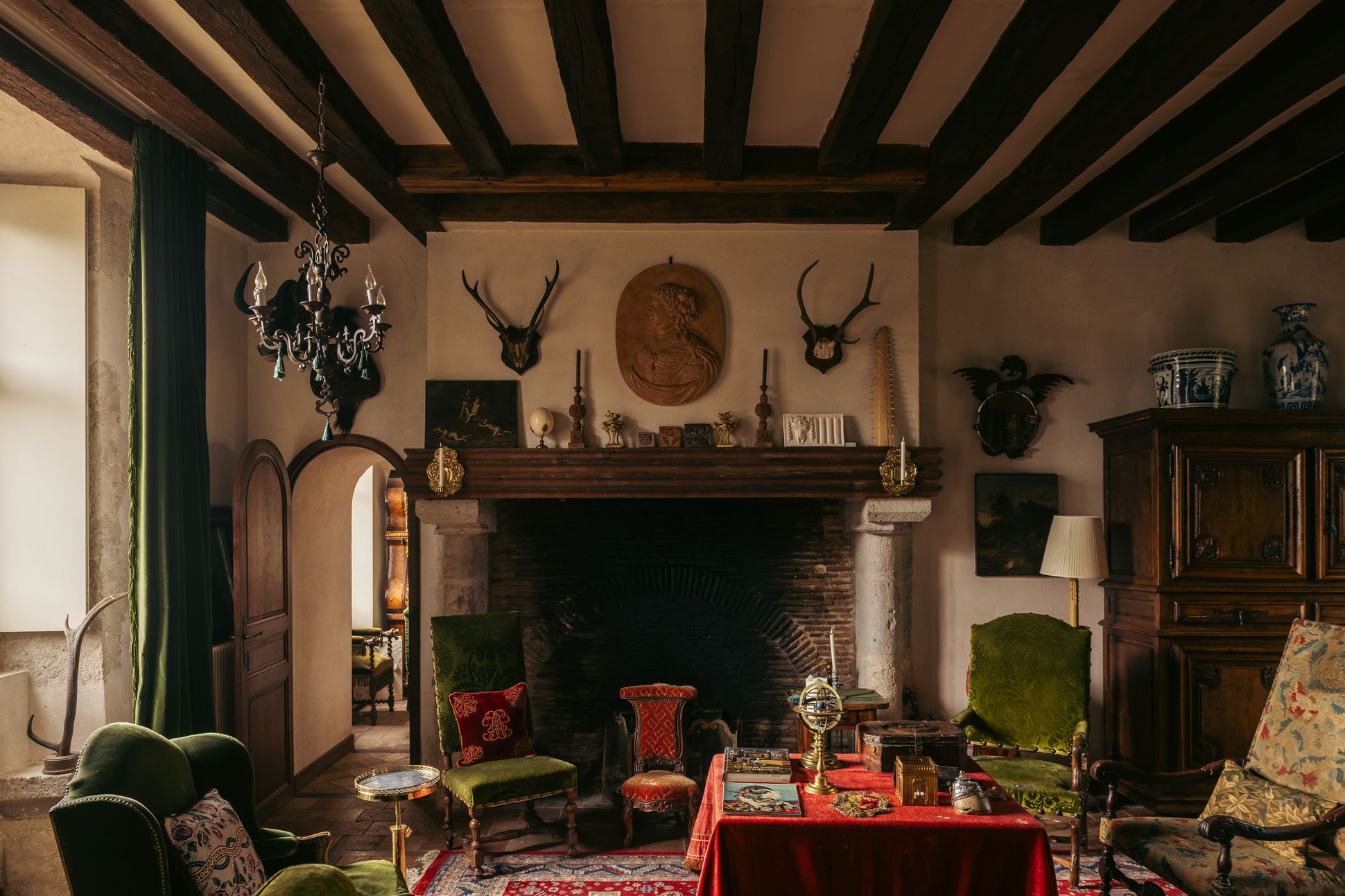
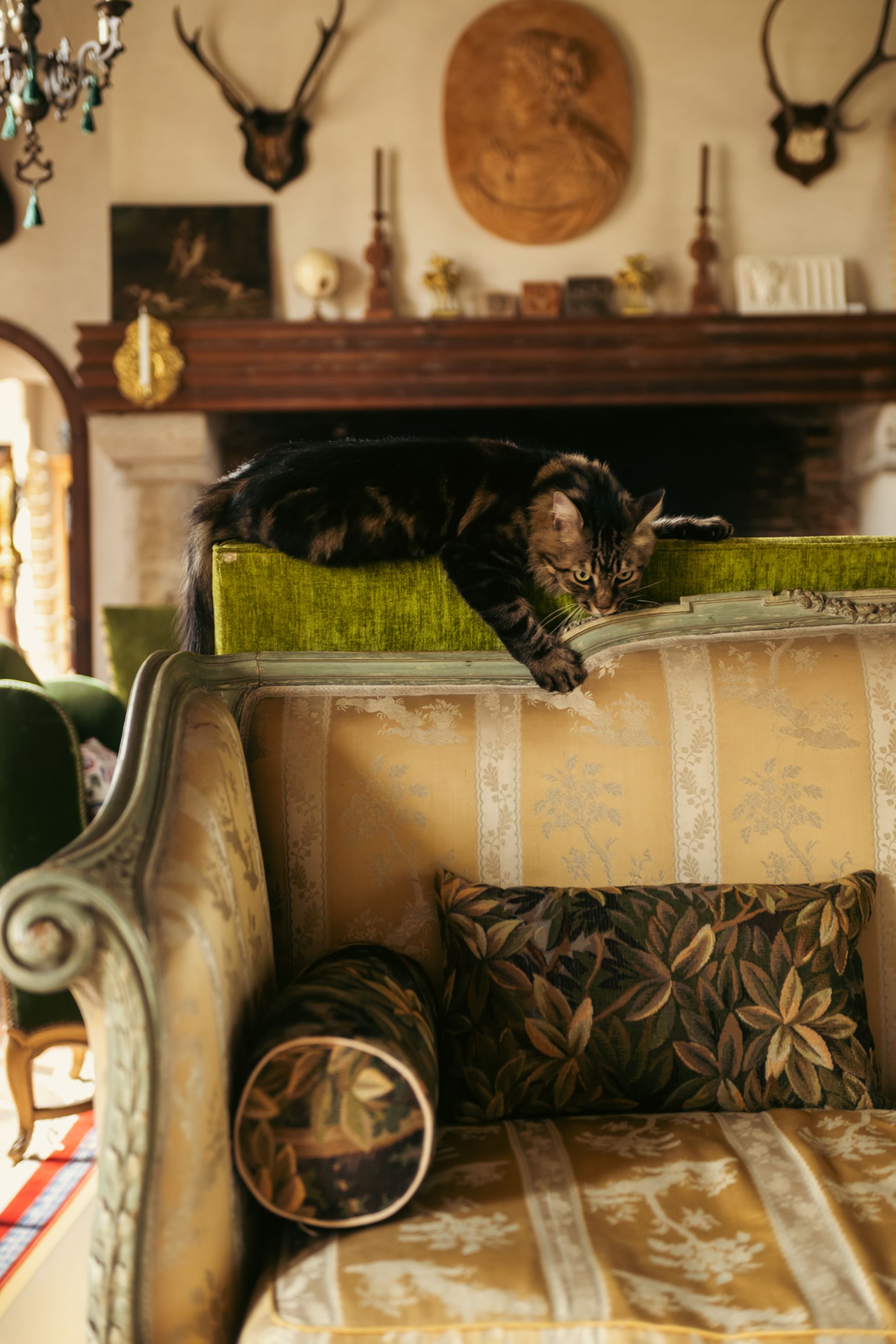
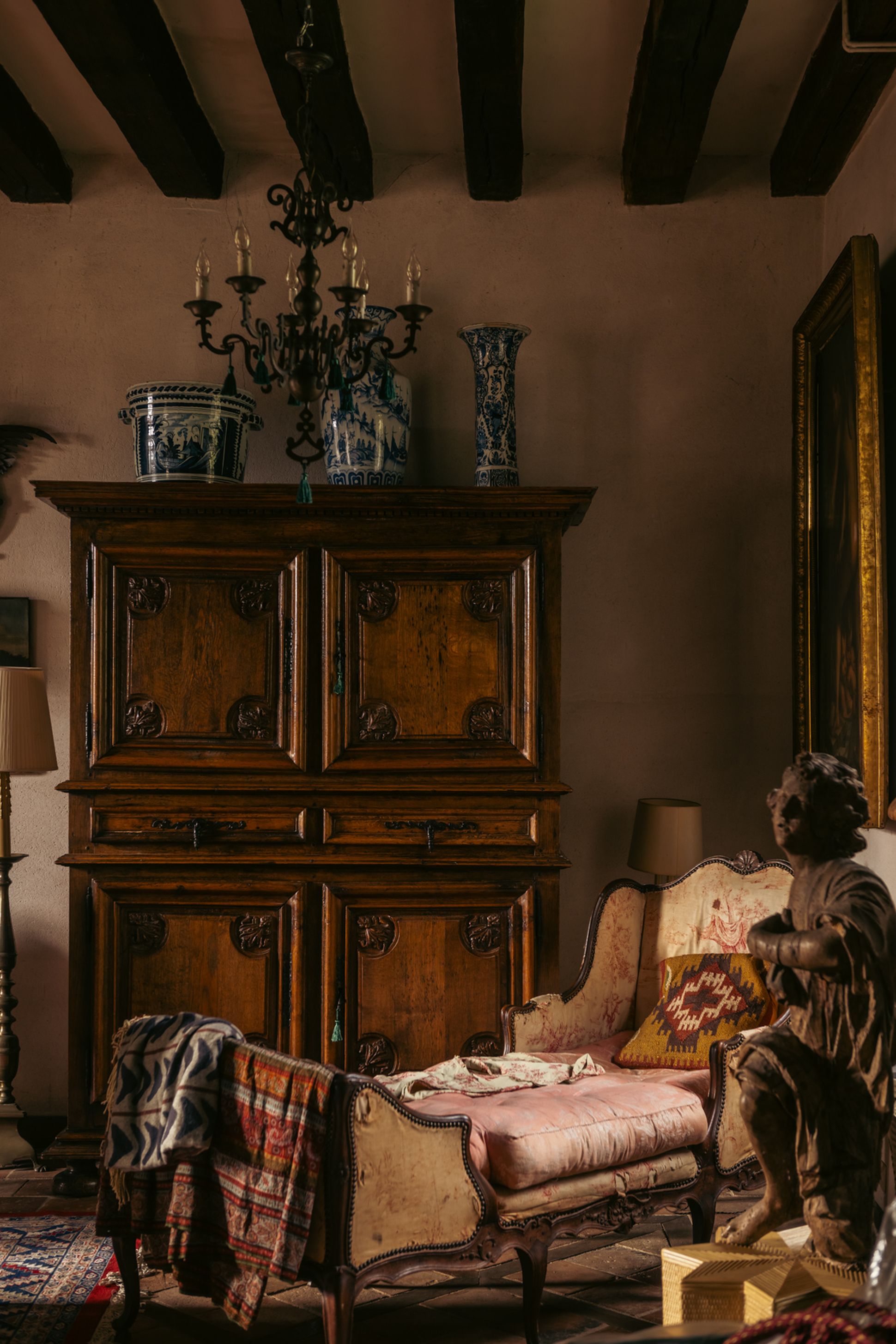
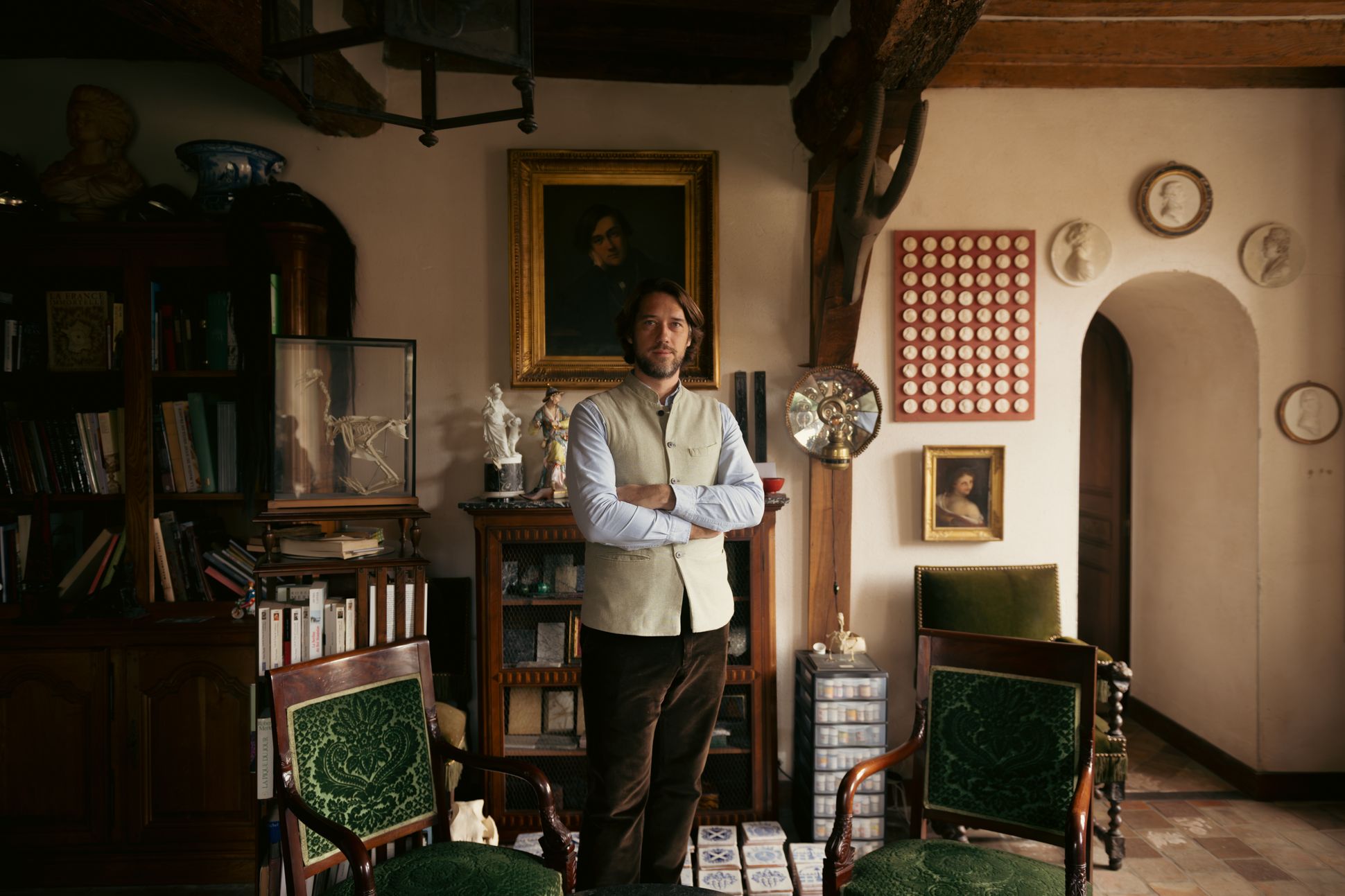
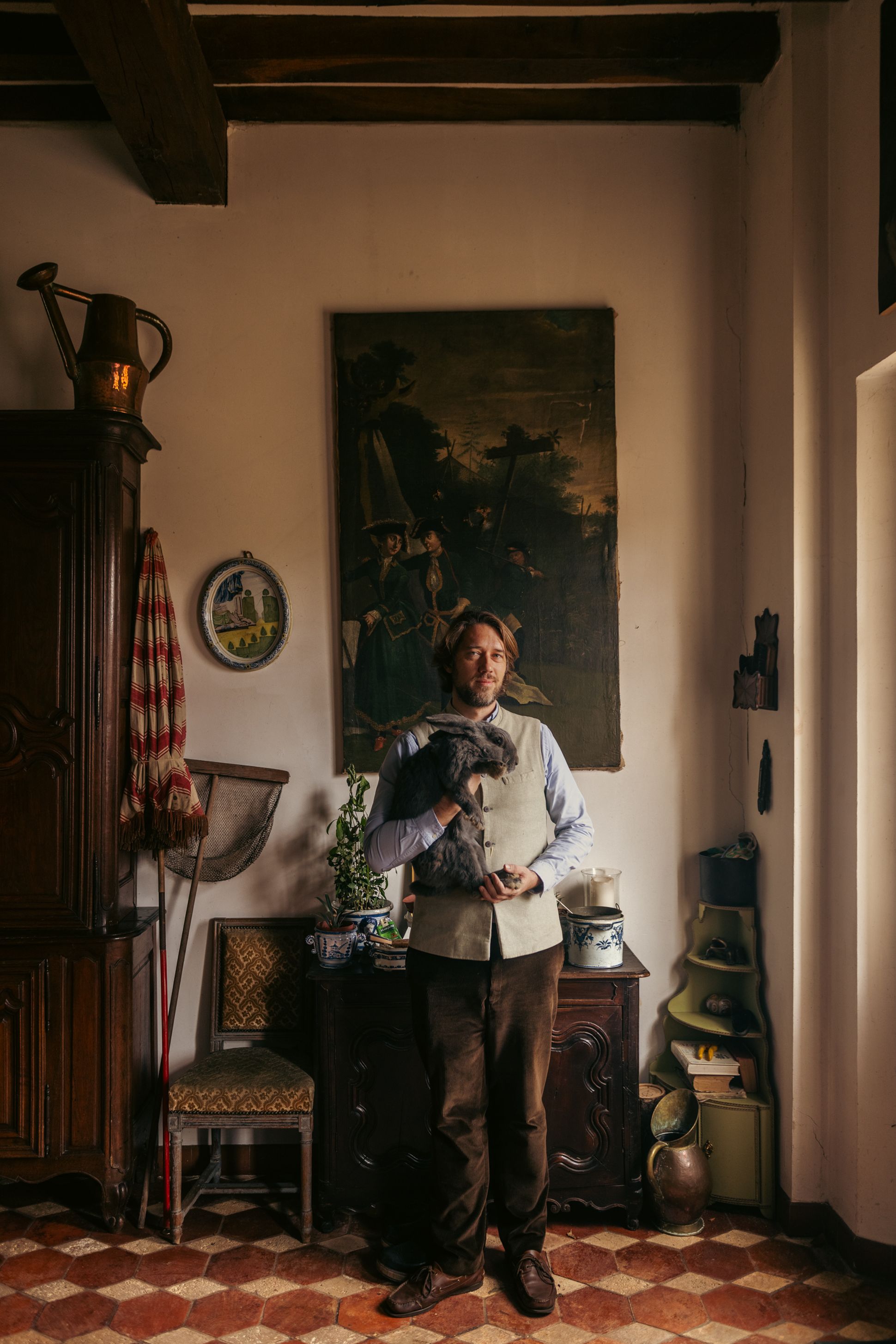
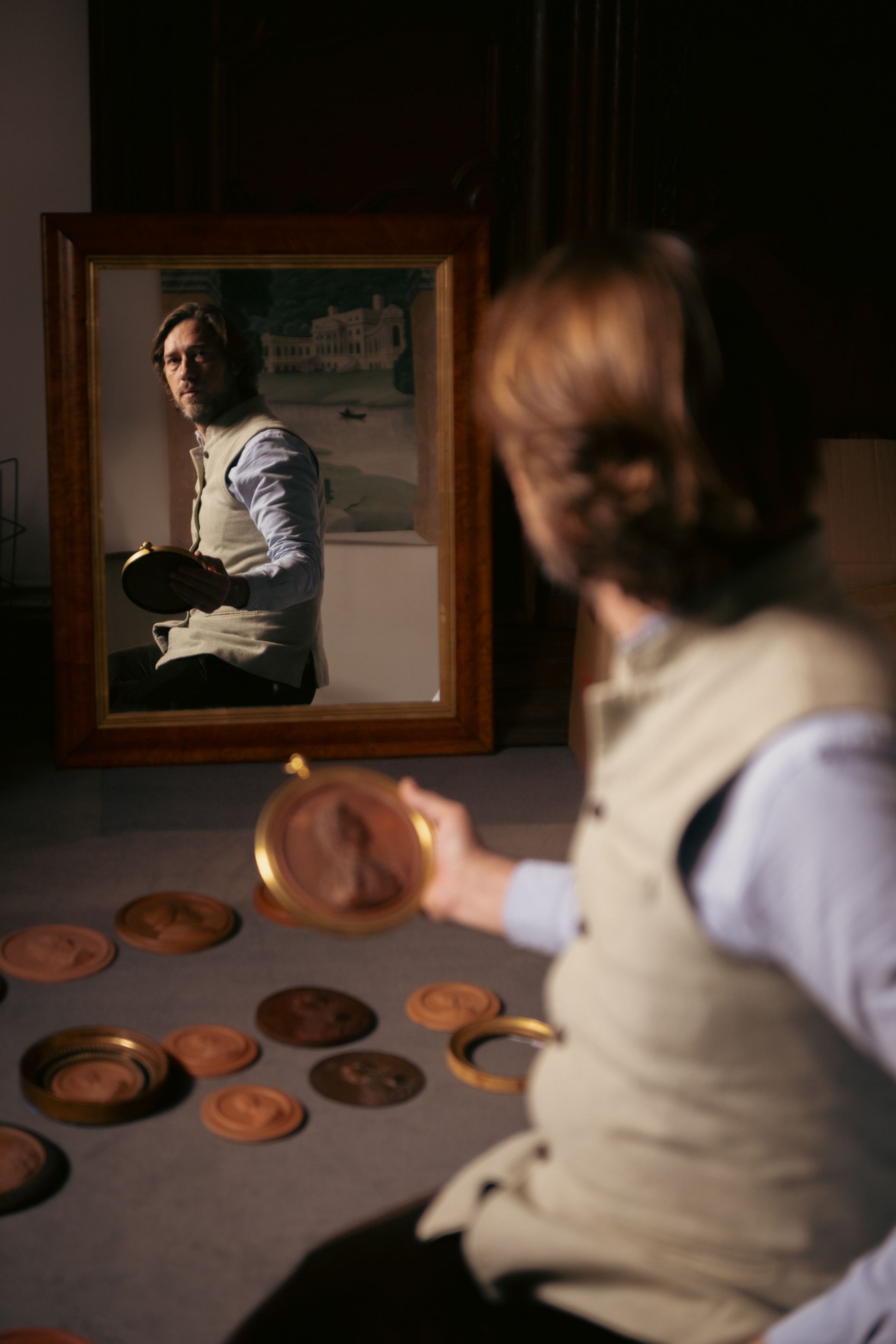
A decorative painter trained at the École des Beaux-Arts and subsequently at the Van der Kelen Institute in Belgium - one of the oldest schools devoted to decorative painting techniques Frantz Wehrlé invites us into his lair : a place that is ever so slightly anachronistic and utterly whimsical. In a 15th-century Maison-Atelier an hour from Paris, he has created a world that is as sophisticated as it is eccentric, where he lives and works whenever he is not on a project in the United States or Italy.
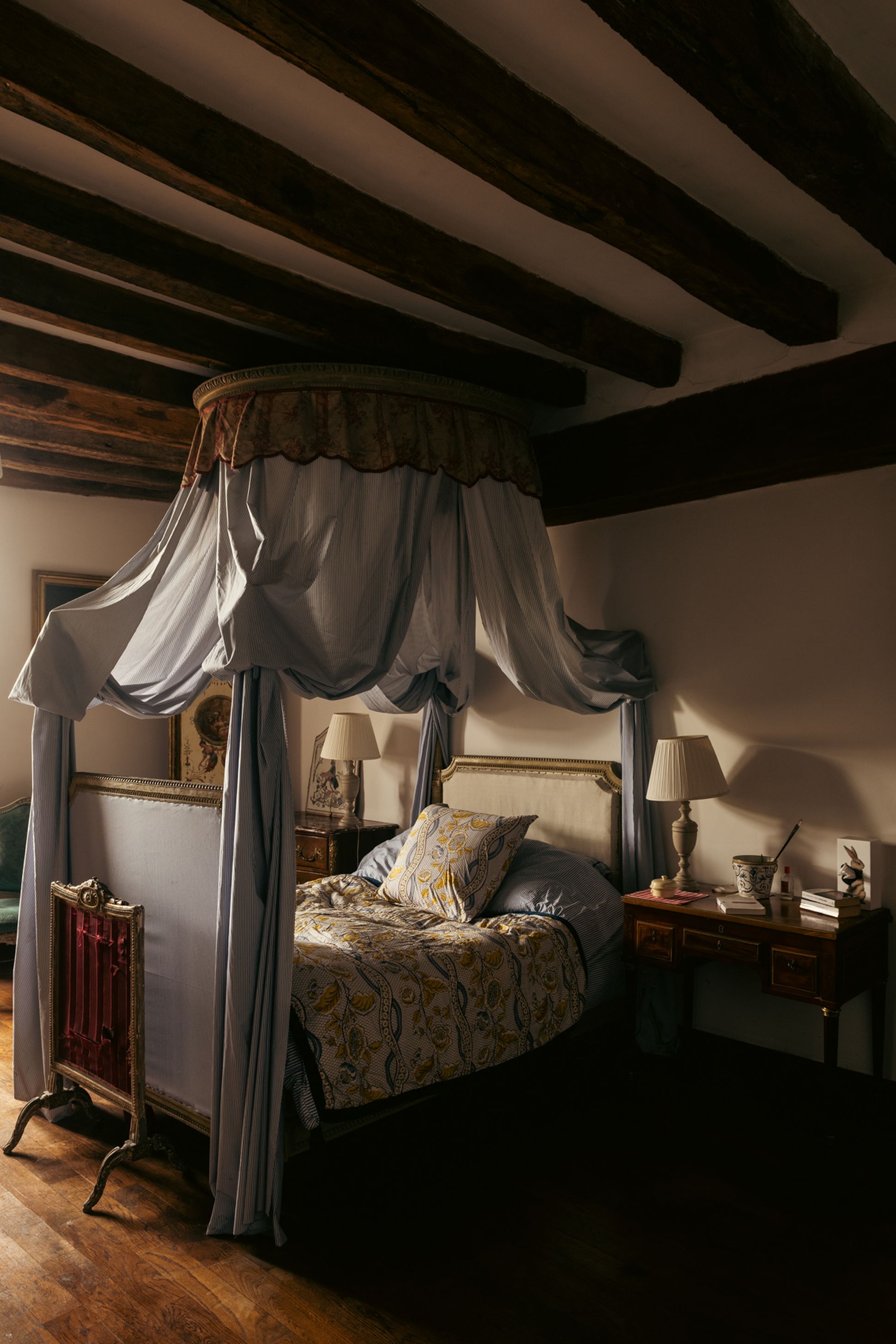
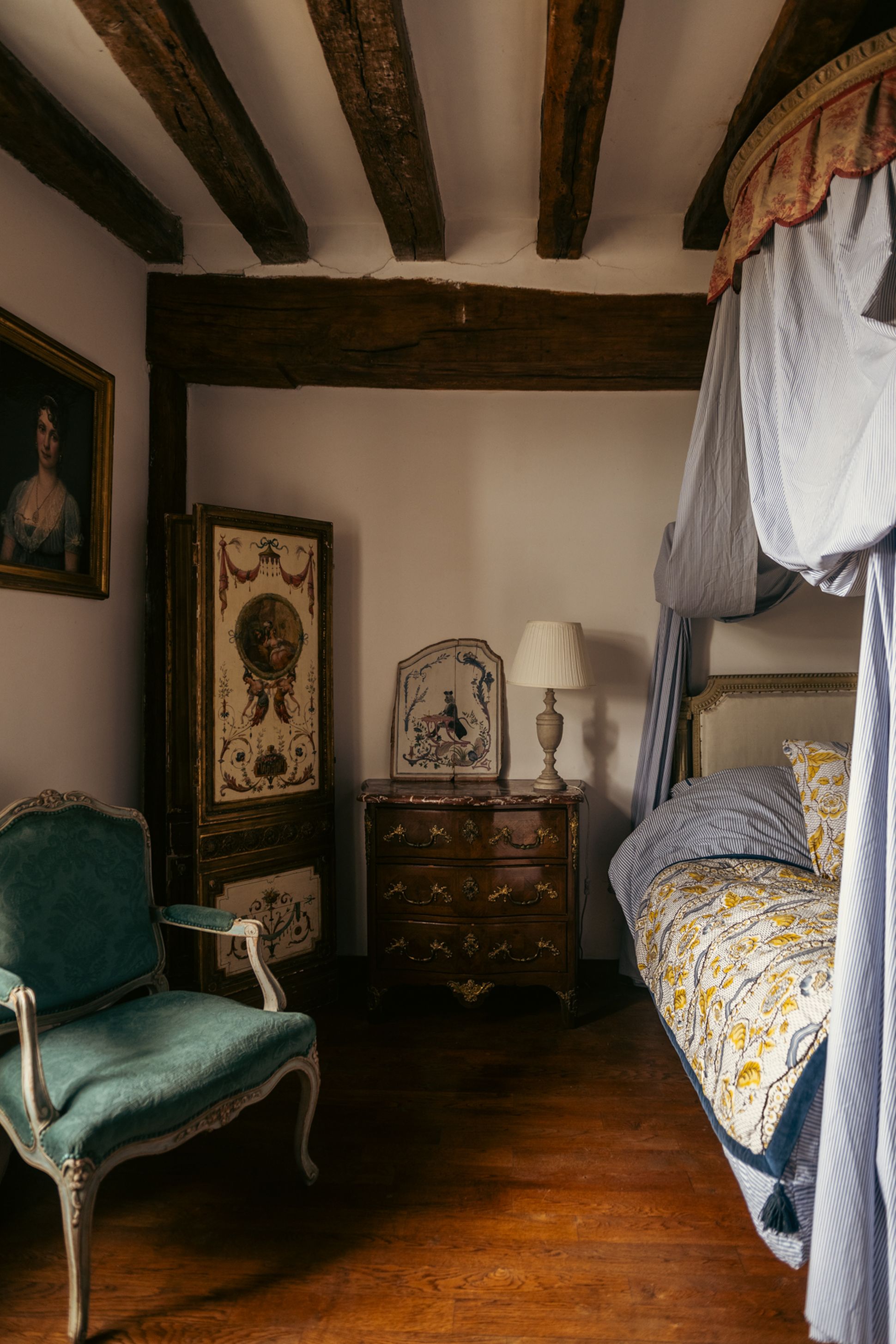
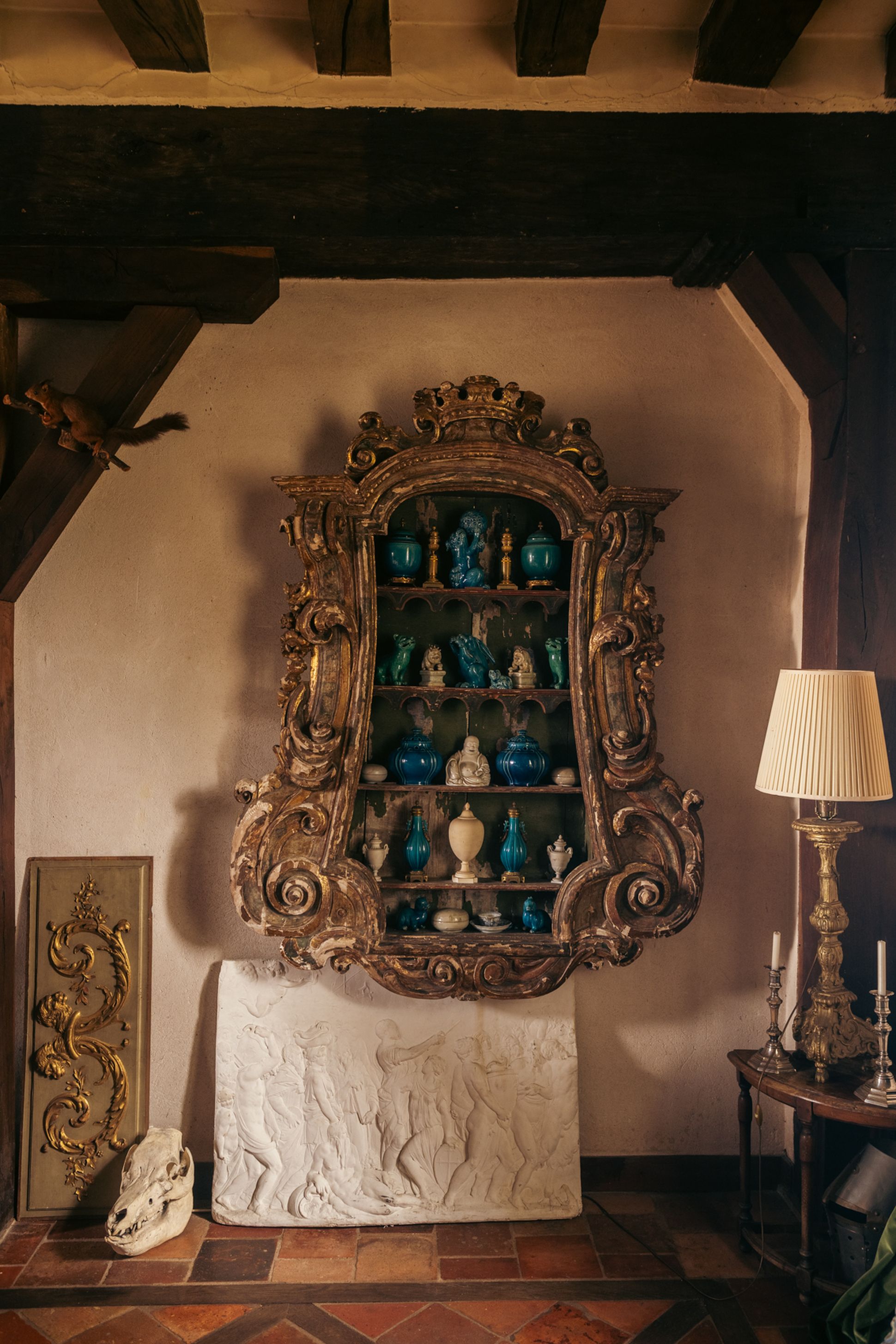
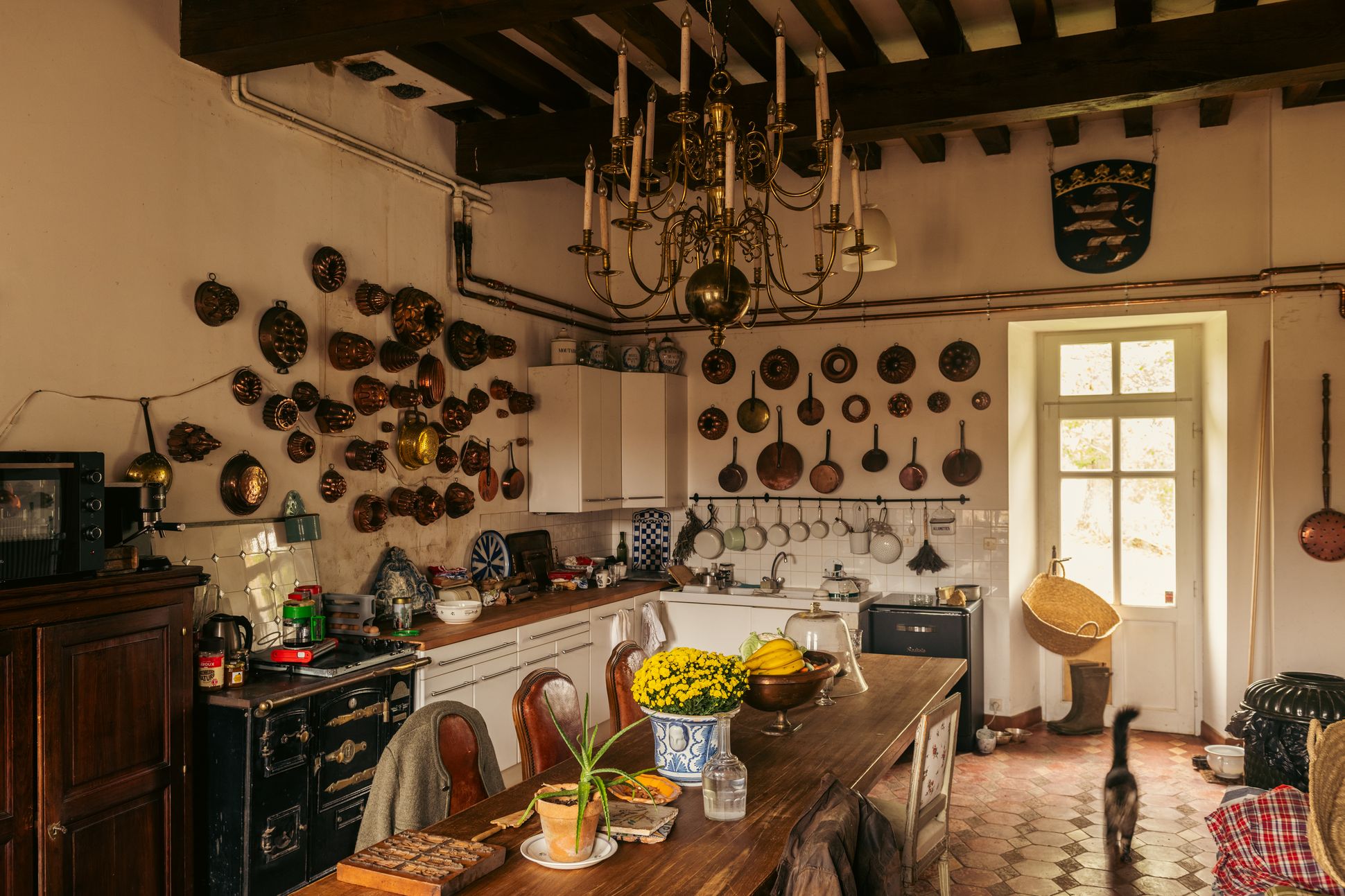
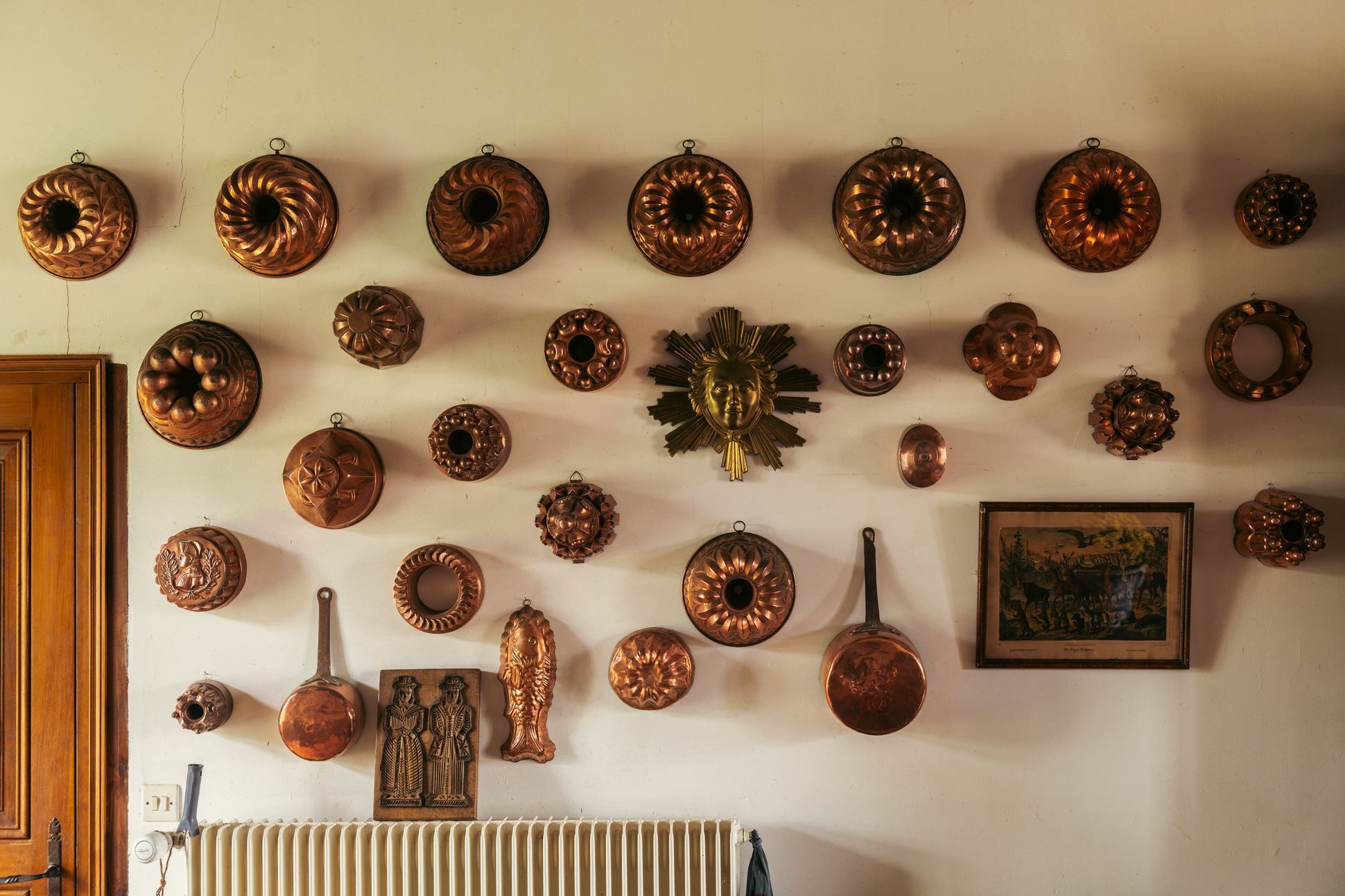
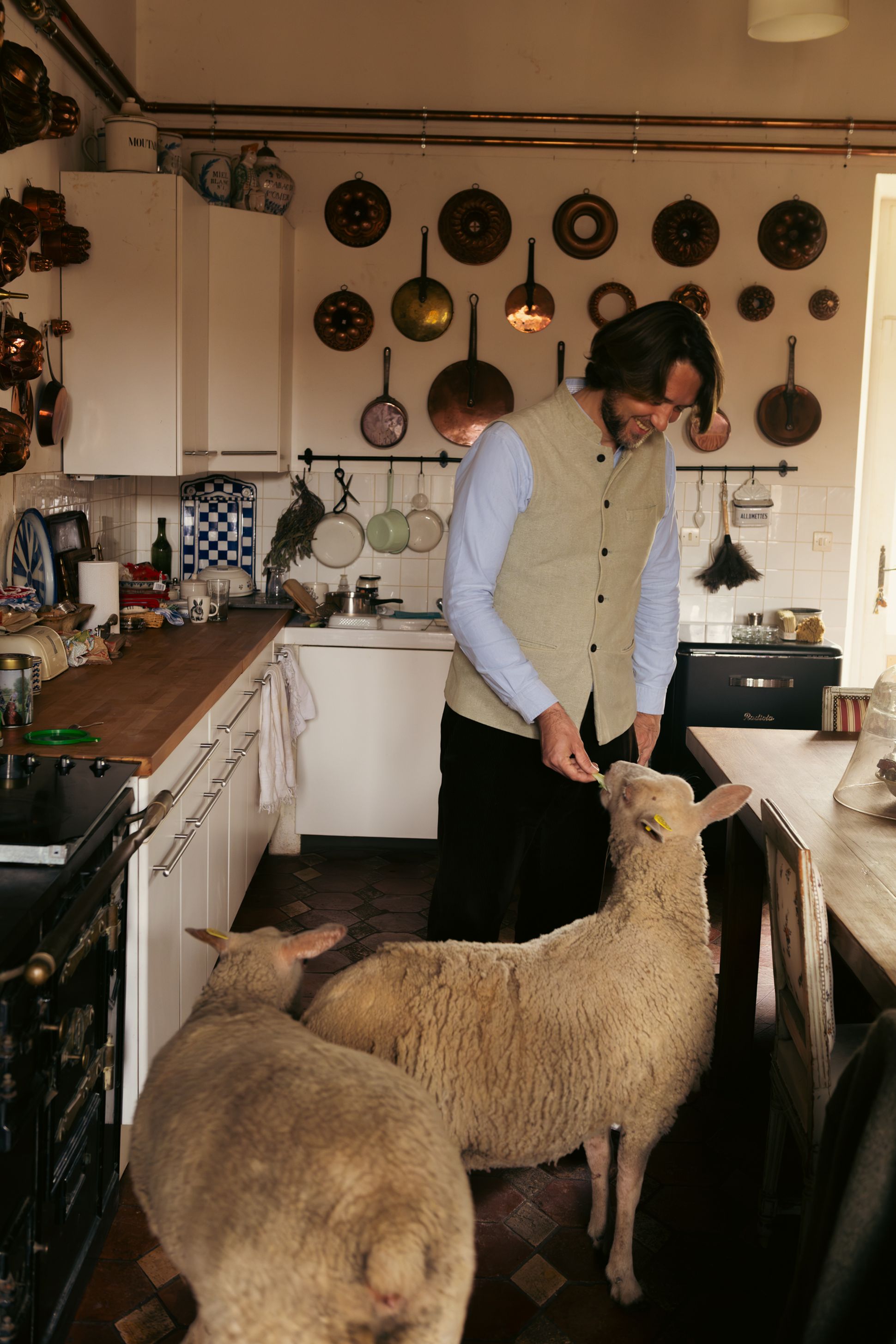
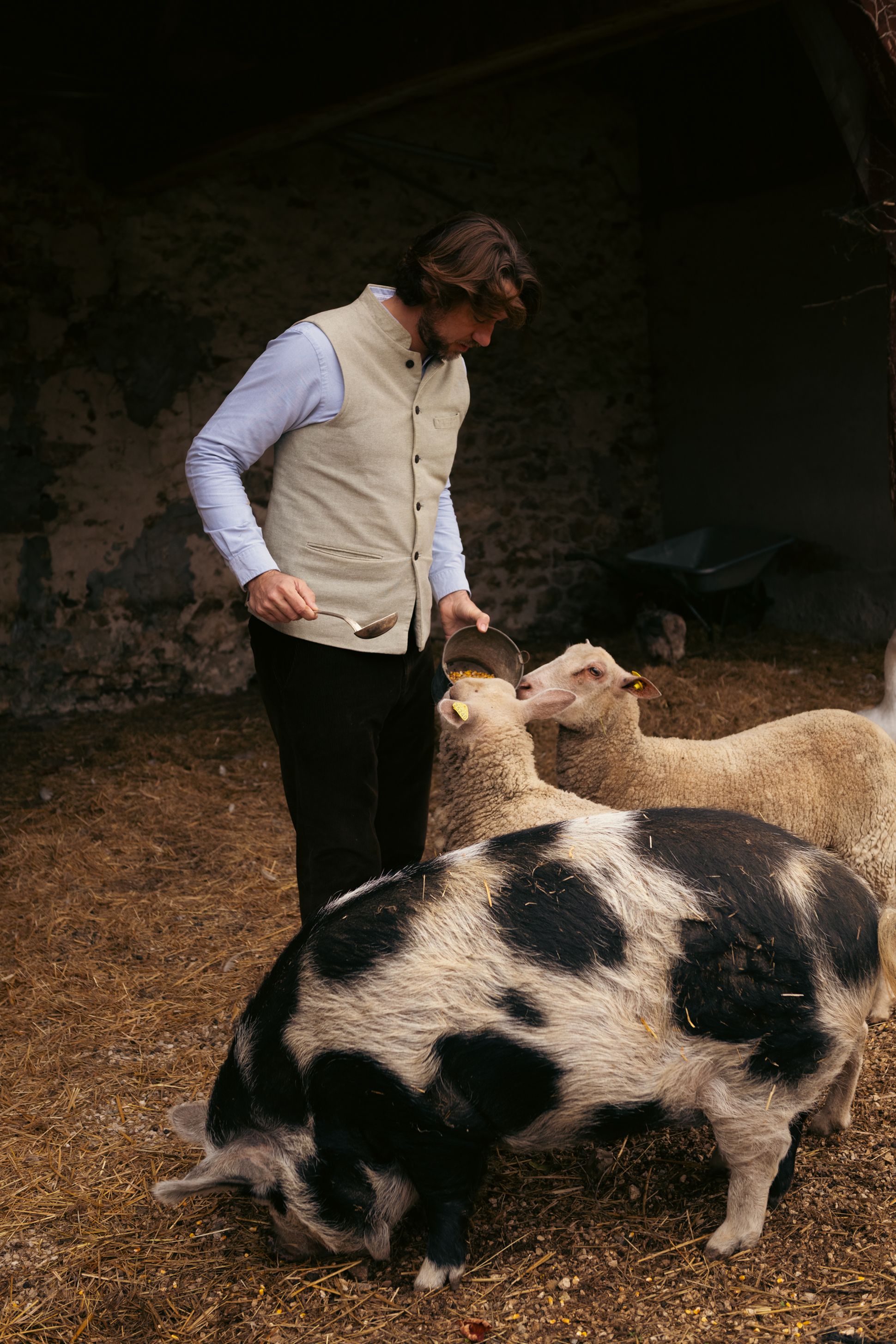
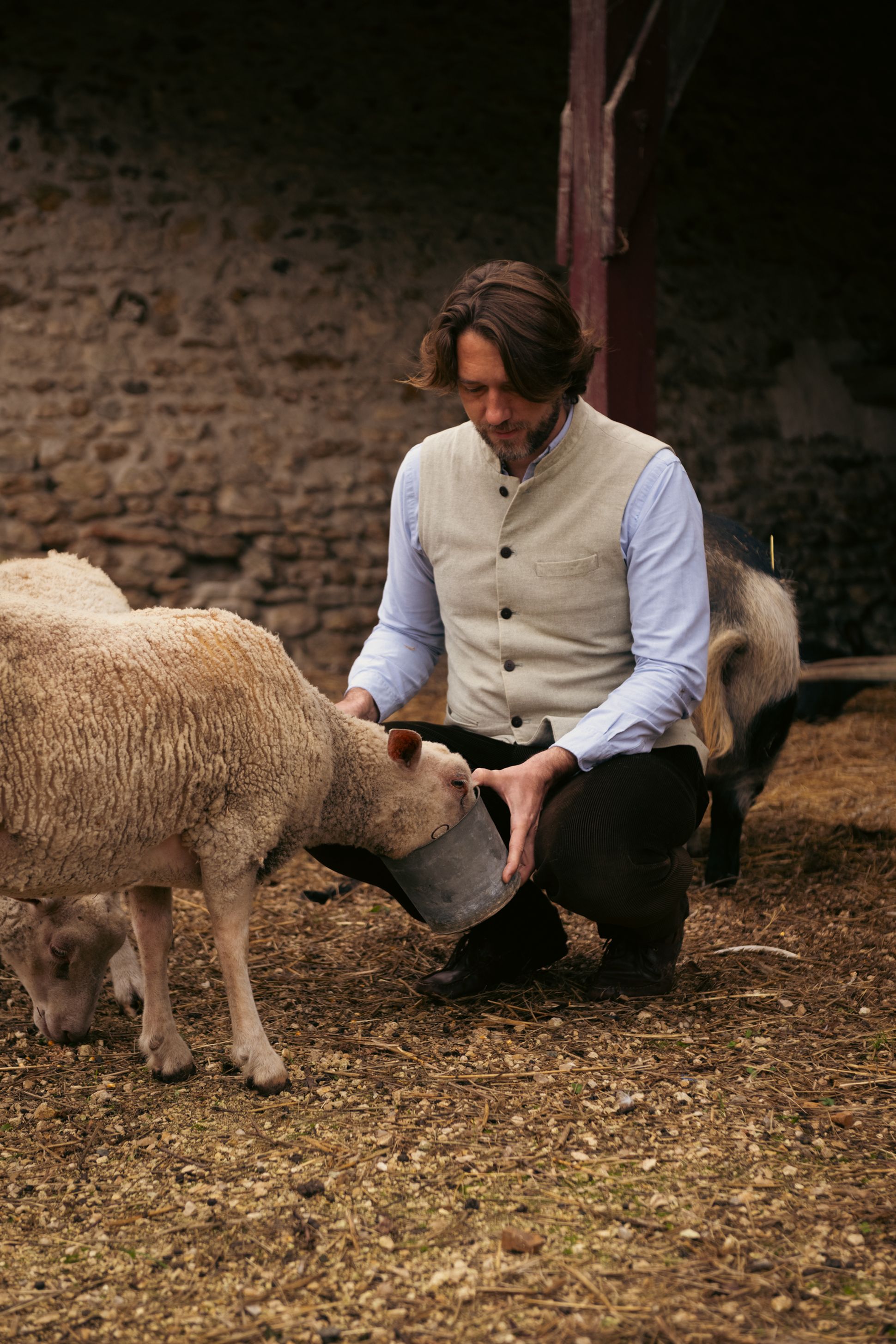
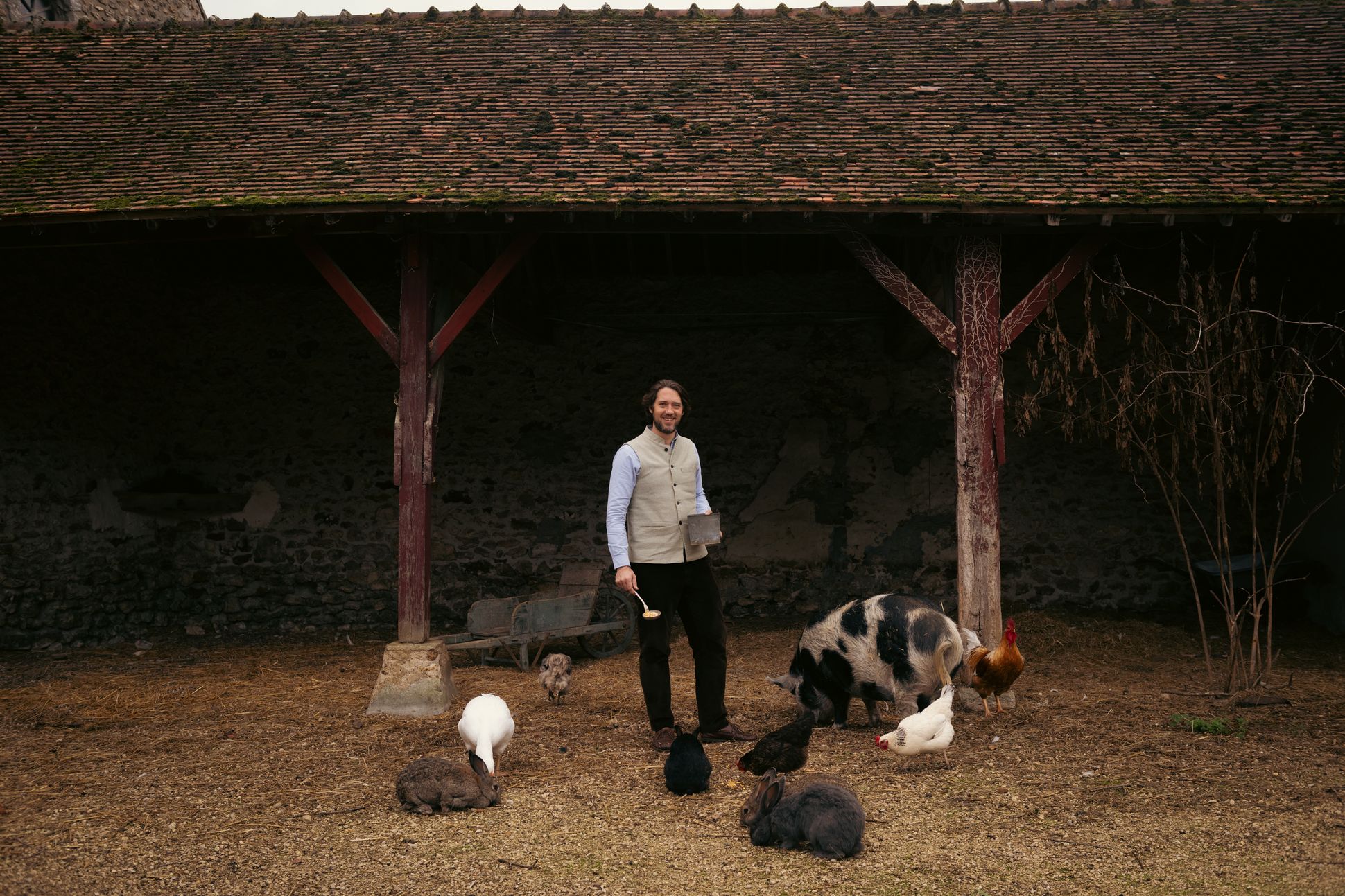
A place that reflects his own free-spirited and original nature, it allows him to indulge and express his deep-seated passion for centuries past. This fascination is reflected in the many collectible objects he owns, as well as in his way of life : in his home, cooking is done in copper moulds, sleep takes place in four-poster beds, candles are not merely decorative accessories but a fully fledged source of lighting, and sheep and even a pig roam freely through the garden. Close your eyes for long enough, and you might well imagine yourself at the Queen’s Hamlet in Versailles.
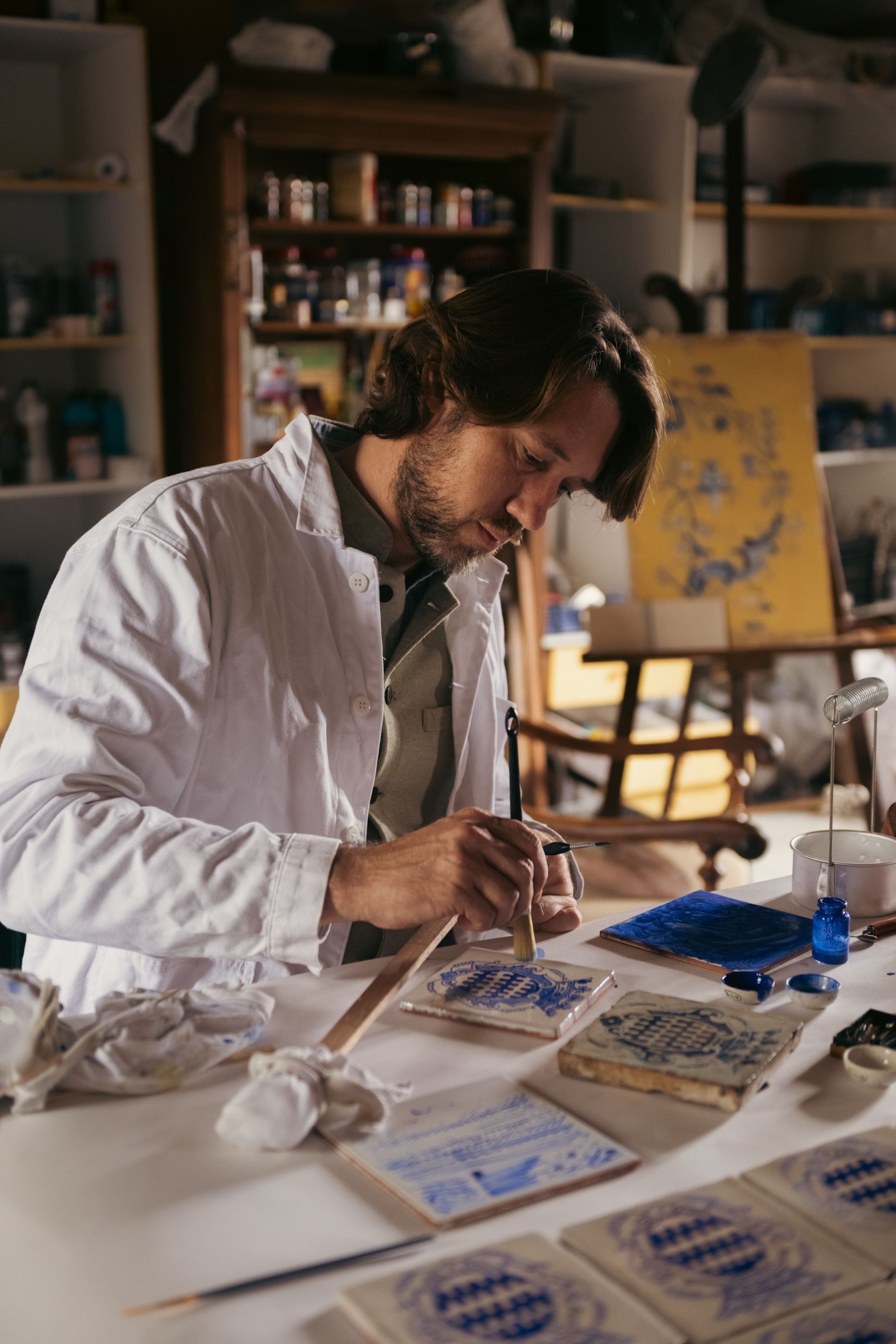
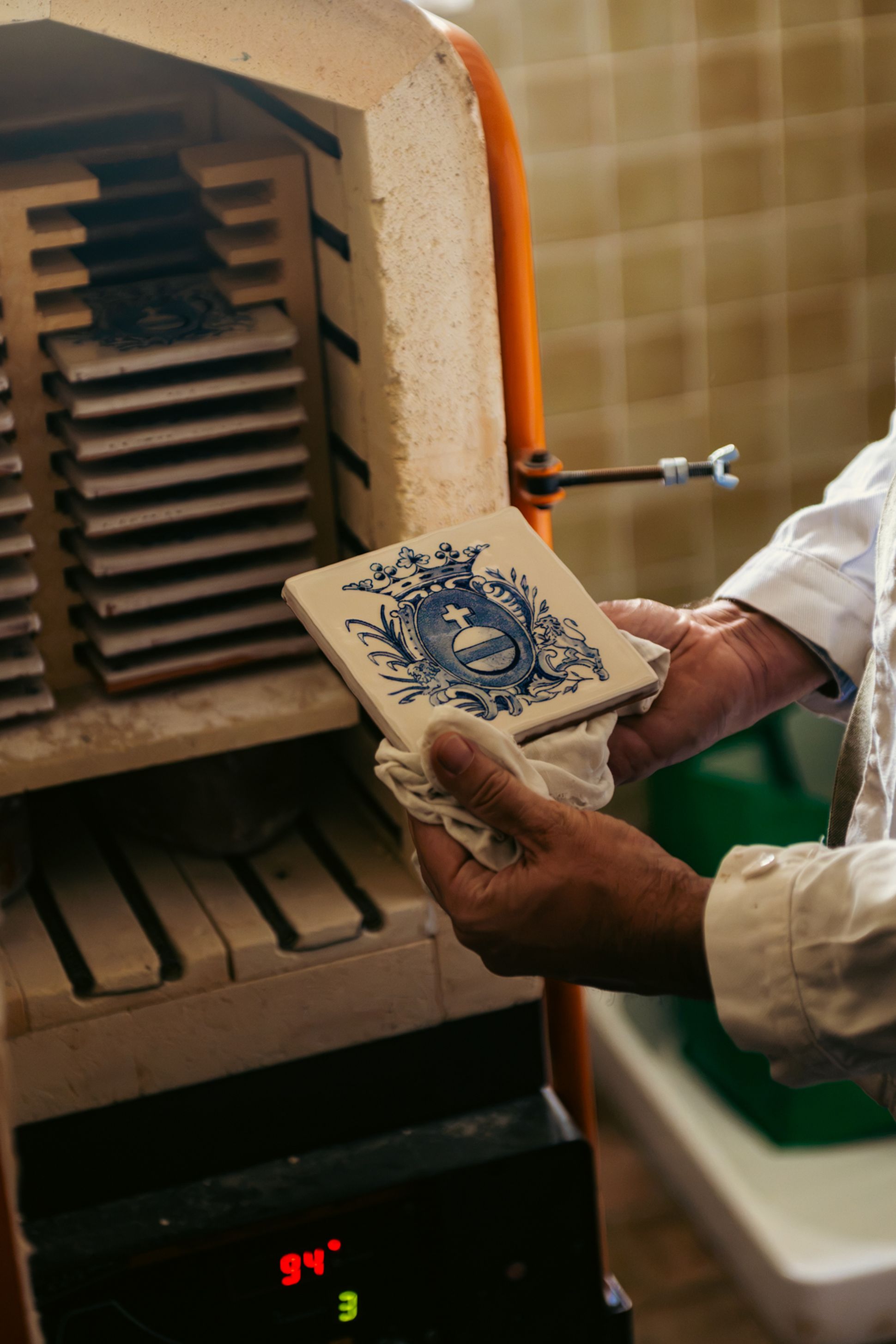
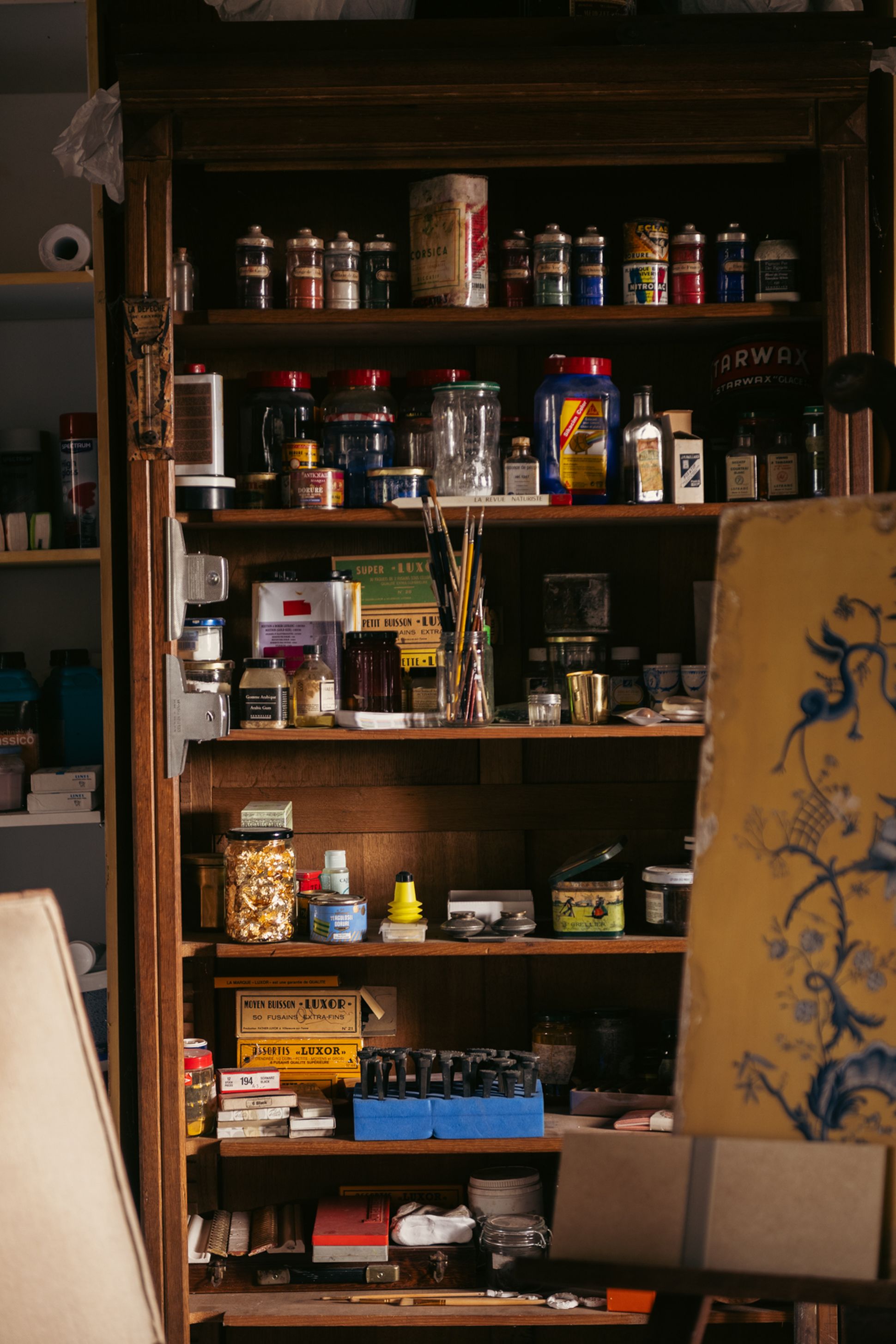
It is hardly surprising: Frantz spent time there, contributing to the restoration of Marie-Antoinette’s boudoir and the rehabilitation of trompe-l’œil façades. His profession, which has become a true passion, allows him to bring long-vanished worlds and decorative schemes back to life. Beneath his brushes emerge singeries inspired by Christophe Huet - the celebrated 18th-century animal painter - , Renaissance frescoes, faux wood and faux marble finishes, as well as painted decorations on faience tiles in the style of Portuguese azulejos.
This meticulous craftsmanship rests as much on a mastery of technique as on a genuine fascination with ornament, all infused with a generous dose of humour.
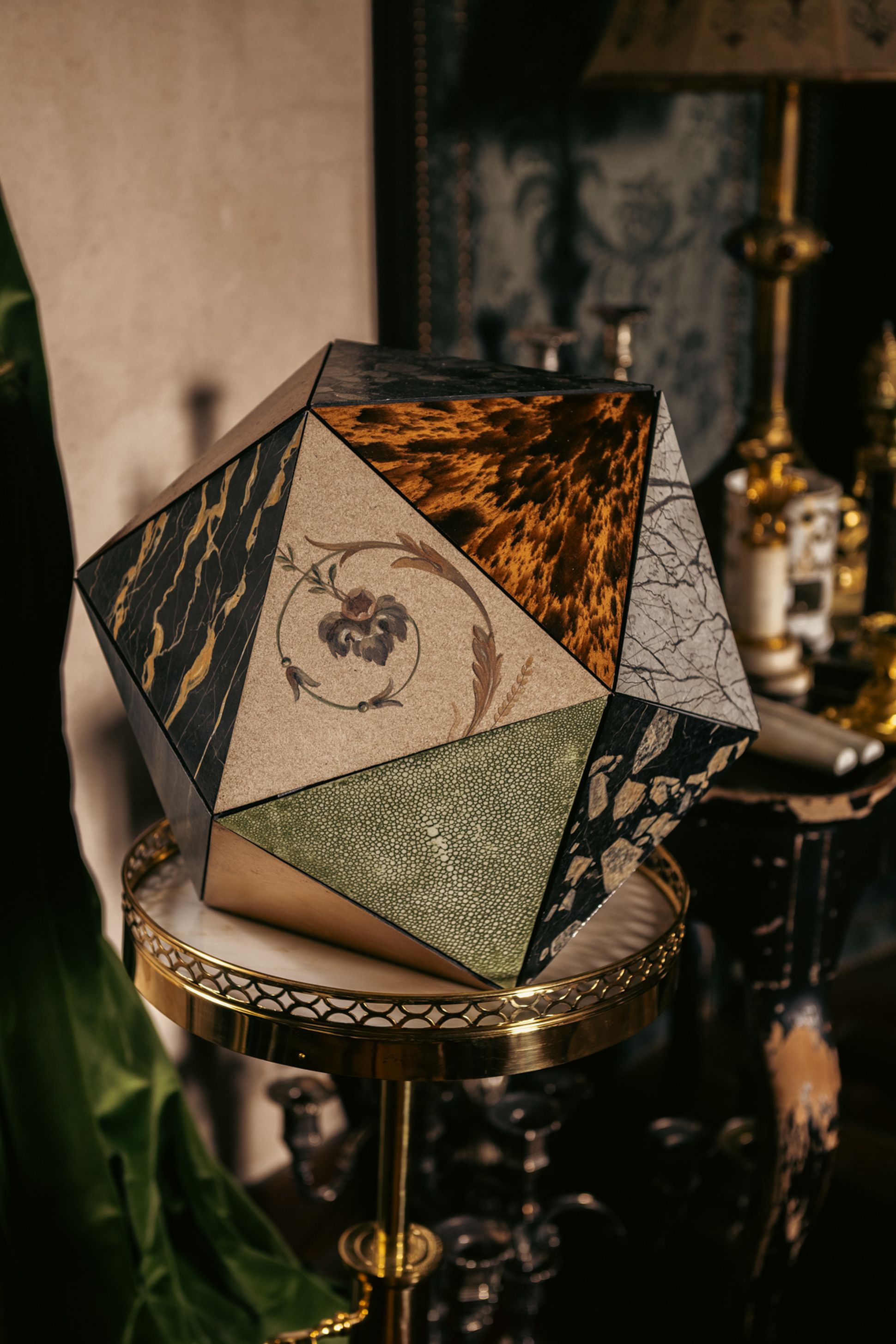
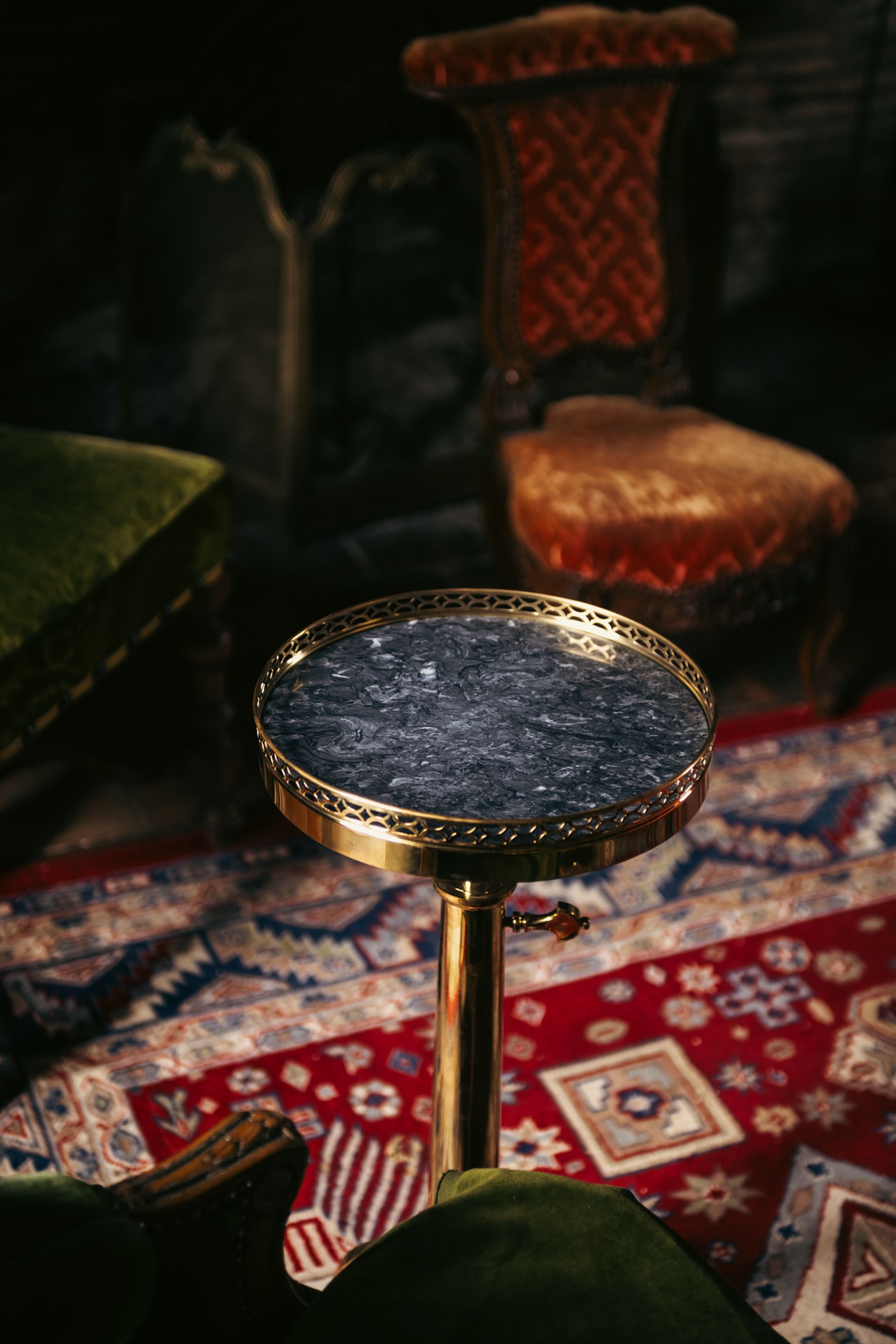
Today, Frantz is venturing into furniture and the decorative arts, and is preparing to launch his own line: Maison Wehrlé. Inspired by the curious objects that surround him, it brings together noble and rare materials in a spirit reminiscent of the marchands-merciers of the 18th century - the Parisian luxury dealers who commissioned and assembled exceptional decorative objects.
While we await the unveiling of his new creations, he invites us to explore what could well be the work of a lifetime: banishing the banality of everyday life through an ideal setting, where different eras converge and imagination reigns supreme.
Location
Loire
Author
Johanna Colombatti
Photos and videos
Valerio Geraci
TSF
How did you discover this unusual property, and what made you decide to settle here ?
Frantz
I discovered the place more or less by chance, at a time when I needed somewhere to work and store my belongings. Although I love Paris, I feel much more at home in the countryside. I need space to create and breathe. When this opportunity came along, almost unexpectedly, it felt like an obvious choice. It was exactly what I needed.
TSF
The house already seems steeped in history. How did you make it your own ?
Frantz
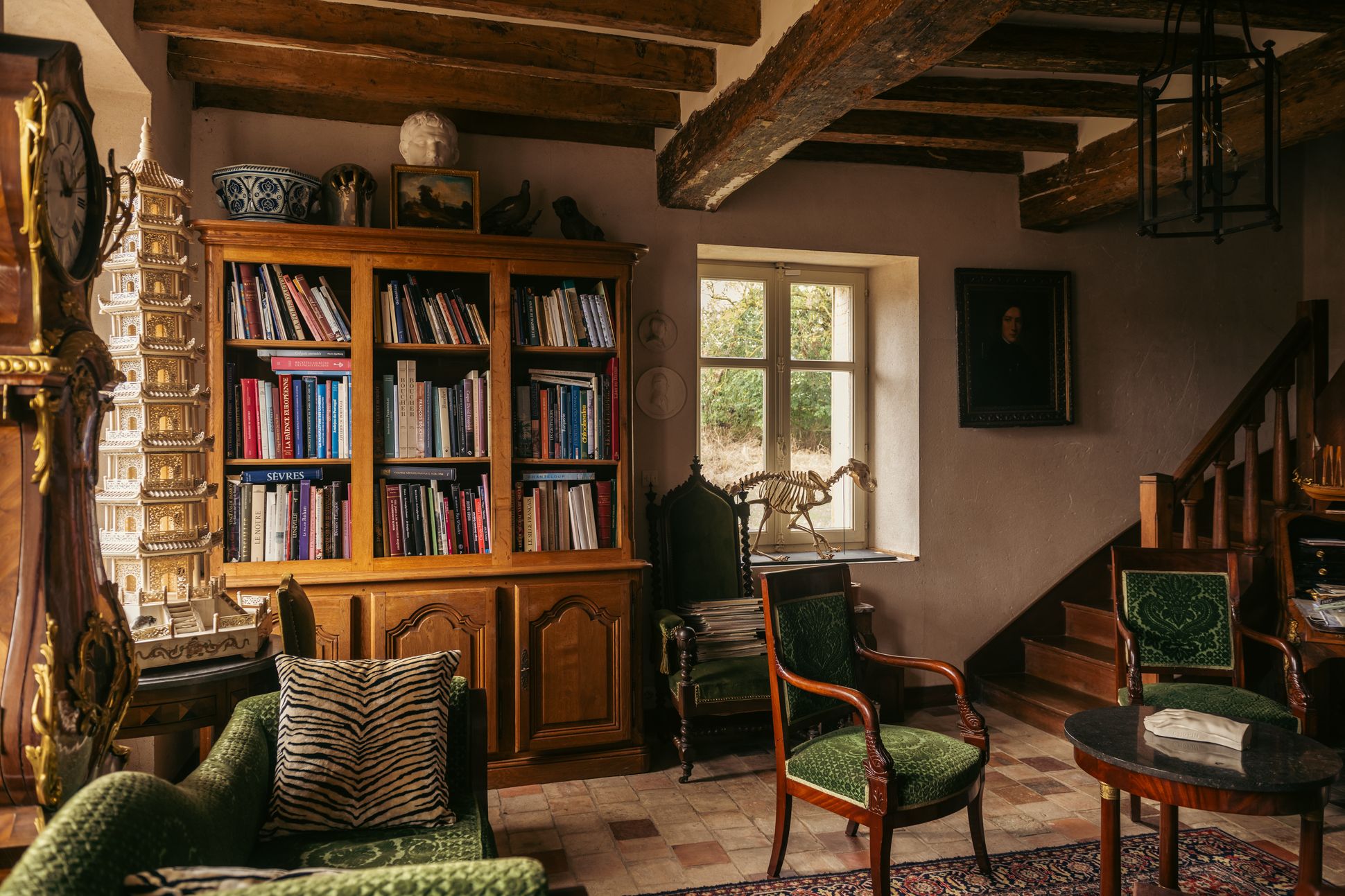
The house had been fairly well restored in the 1980s, but it was completely empty. I made it my own quite simply by bringing in all the things I had accumulated over the years: my paintings, rugs, armchairs, objects and so on. I have done virtually no renovation work. Above all, I let my belongings find their place and allowed the house to gradually come to life.
TSF
You live surrounded by a great many objects. How did this collection come about ?
Frantz
I have always been surrounded by antiques. My parents and grandparents already had a taste for old things. What attracts me above all is the beauty of objects, whatever their period. Extraordinary things have been created throughout history, and I love living among them.
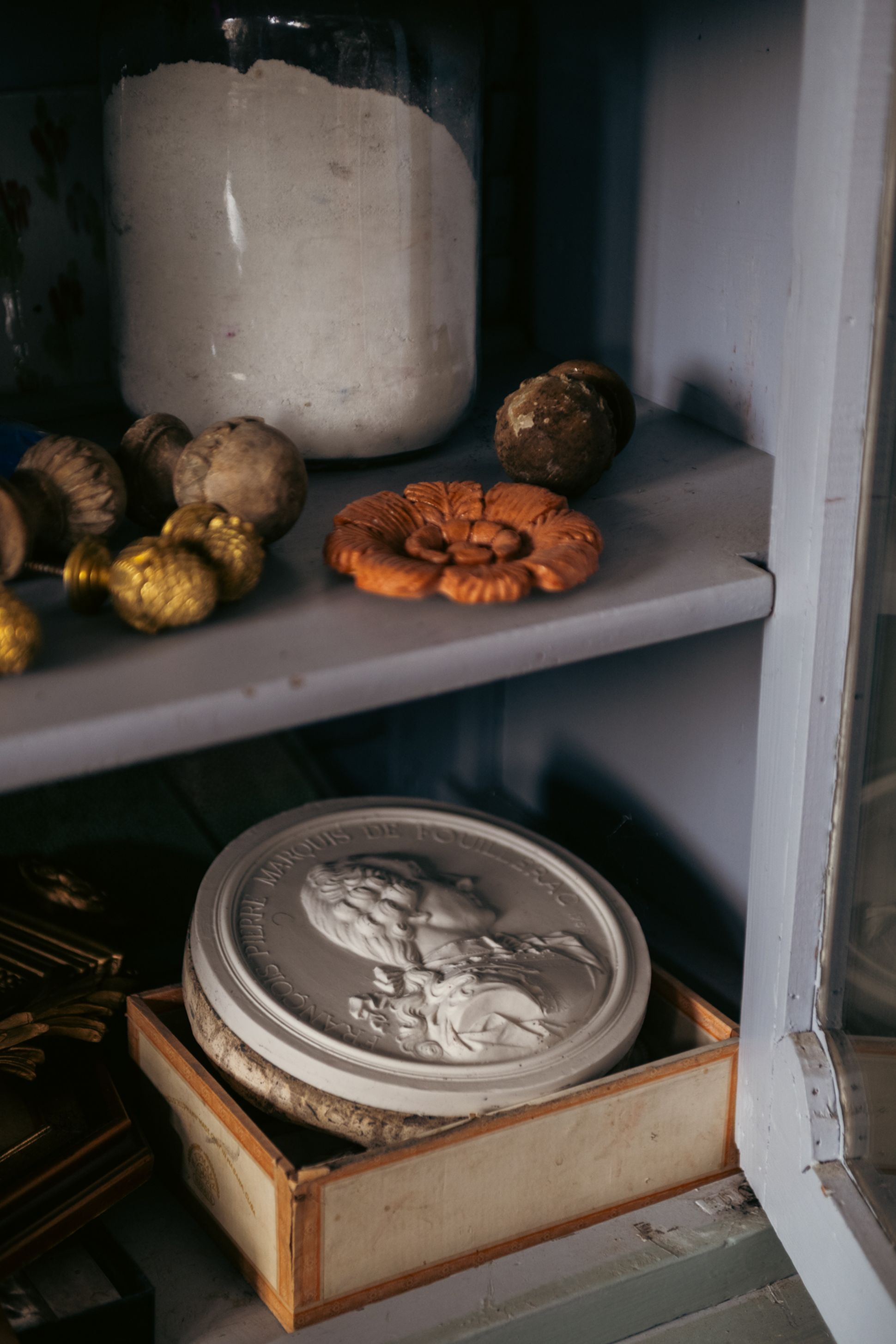
It is an obsession that, these days, requires more space than money, because many antiques have rather fallen out of favour with the general public. And then I had the misfortune — or the good fortune! — of living next door to Hôtel Drouot for several years. It can be a rather dangerous game: I would regularly come home with an object under my arm or a chair to load into the car.
TSF
Has the distinctive character of the house influenced any of your acquisitions ?
Frantz
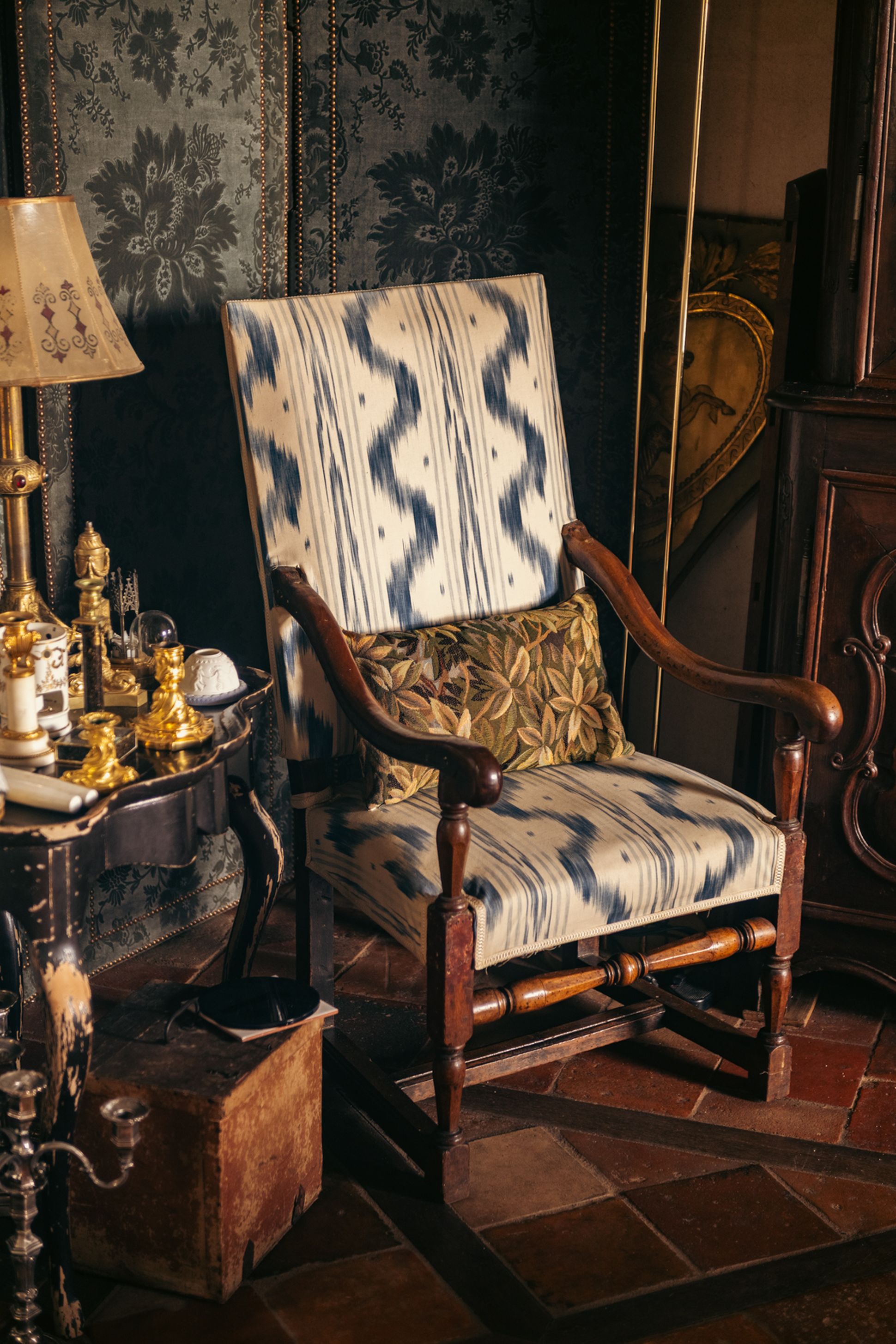
Absolutely. The house has forced me to look at things differently. I had a great deal of 18th- and 19th-century furniture that worked very well in my previous interiors, but the proportions here are quite different. In a room of this scale, a very pretty little 18th-century armchair can suddenly look almost ridiculous.
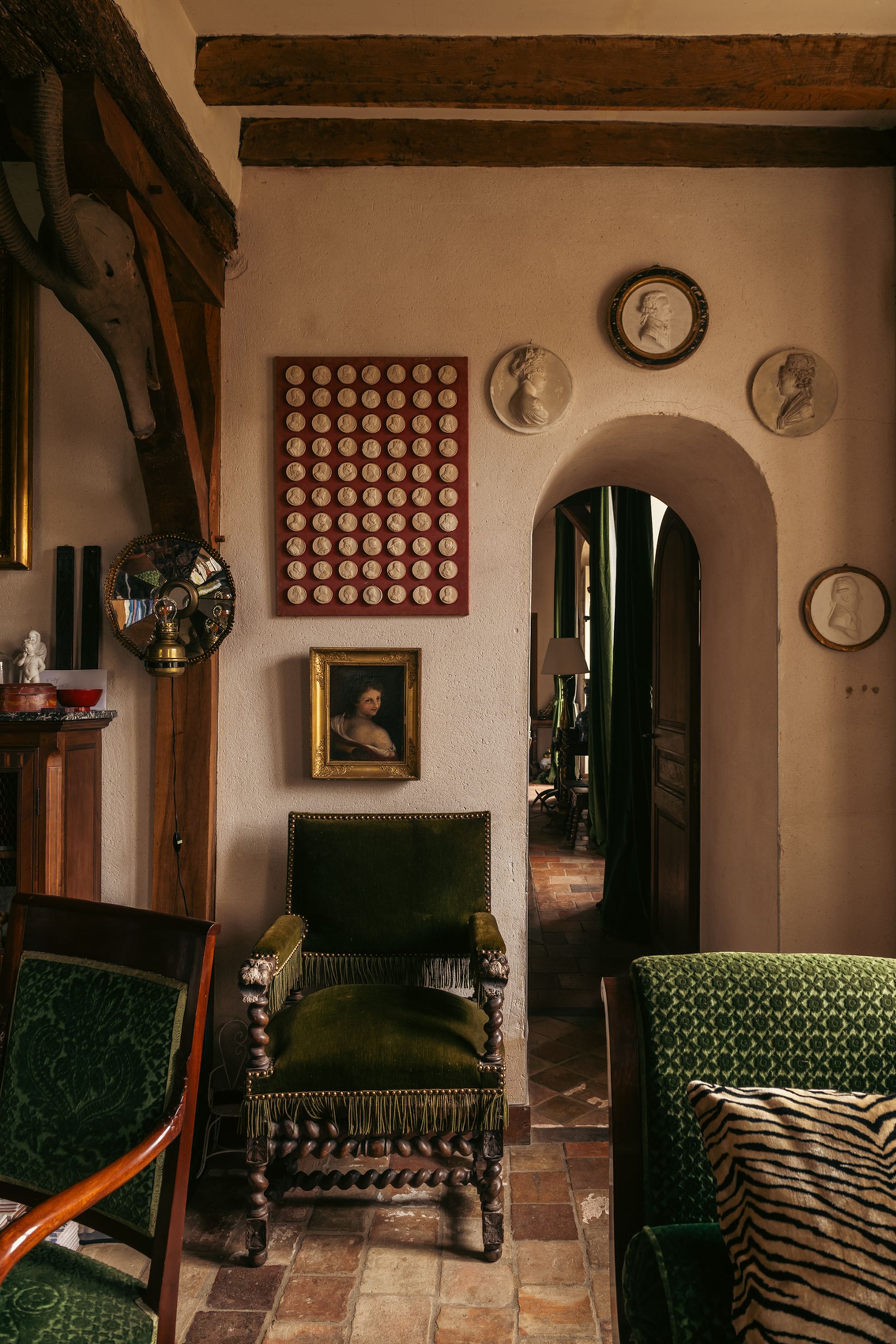
So I bought a few pieces of much earlier furniture, larger and more substantial items, such as a big chest and some Louis XIV armchairs, which work much better in the space. The house has genuinely guided some of my acquisitions. And I am fortunate that this type of furniture is rather neglected nowadays, which means it is often surprisingly affordable.
TSF
How does your work as a decorative painter fit into life here? Have you created any trompe-l’œil decorations in the house ?
Frantz
As the saying goes, the cobbler’s children go barefoot! I have a thousand ideas for this house, but unfortunately very little time to put them into practice. So far, I have barely created any painted decorations here. It is certainly not a lack of ideas — simply a lack of time.
TSF
Your studio is upstairs. What does this environment bring to your everyday life ?
Frantz
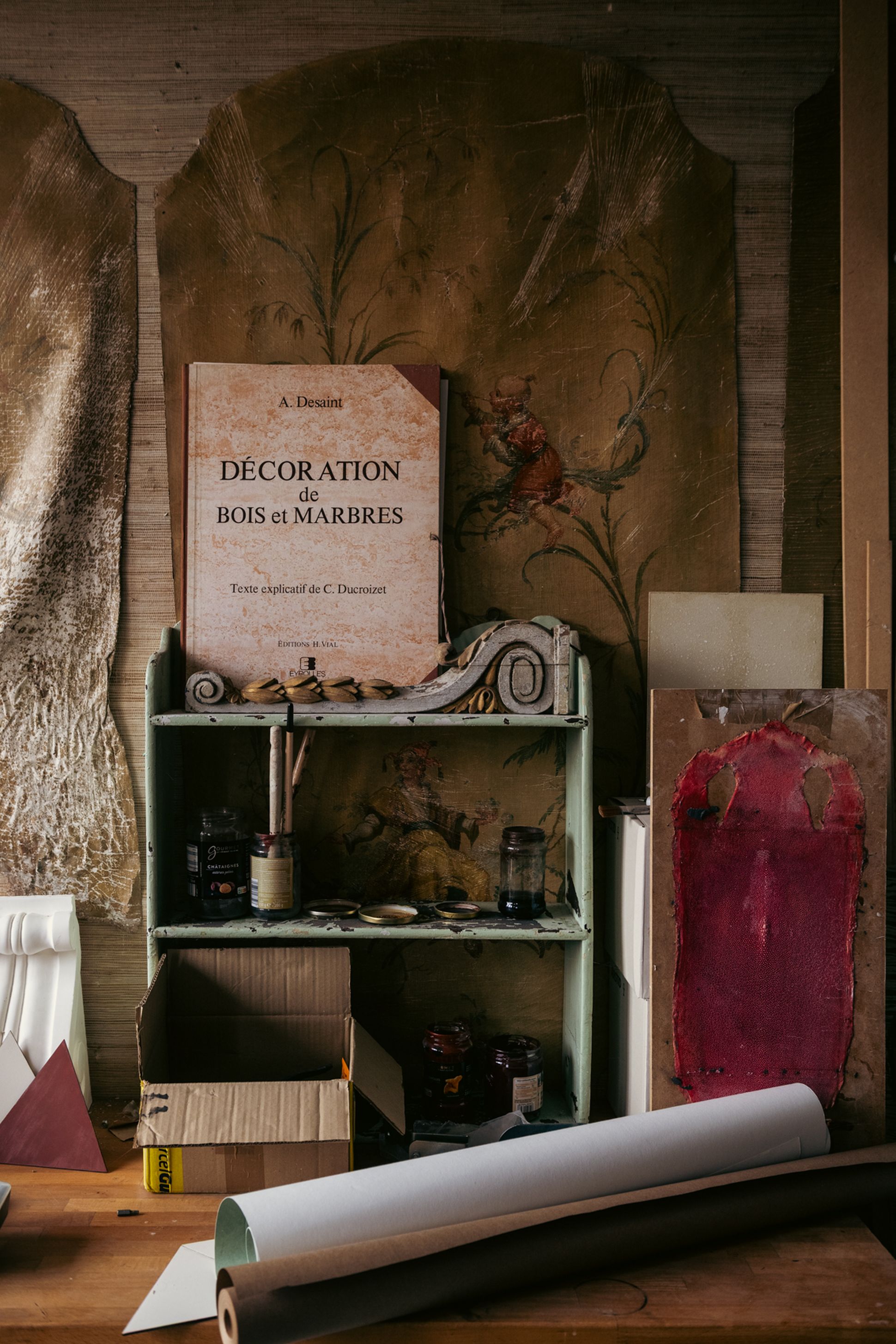
In fact, I have several workshops throughout the house, each serving a different purpose. In the courtyard, on the ground floor, I have a more basic space for storing materials and carrying out messier work, such as sanding or plastering. There is another area in the library dedicated to ceramics, with the kiln just behind it. And up in the attic, I have a very large studio with natural light from both sides, which I tend to use in winter or for delicate work requiring a clean, dust-free environment.
But the arrangement is constantly evolving. Depending on the project, I tend to gradually take over other rooms. If I am working on something large or cumbersome, the living room becomes a workshop, then sometimes the dining room, or even the kitchen or garden! Ultimately, the entire house can become a workshop.
TSF
Through the window, we can see the animals, which brings to mind the Queen’s Hamlet at Versailles and its return to a bucolic way of life. You worked there — what did you take away from that experience ?
Frantz
I was lucky enough to work at the Queen’s Hamlet in 2021, right in the middle of the Covid pandemic. The estate was closed to the public, and we were practically alone there with the gardeners. It was an extraordinary experience, almost outside of time, which allowed me to discover the Hamlet in a very special way.
I have always loved the idea of a bucolic lifestyle, with a little farm and animals close at hand. In a way, I have recreated something of that here, in my own fashion. I have rabbits, sheep, chickens and cats, and their presence brings me an enormous amount of joy. I must admit that I rather prefer the company of my sheep or rabbits to the crowds on the Metro !
TSF
How does living in the countryside, in a place steeped in history, change your way of life and your relationship with time ?
Frantz
I would not say it has fundamentally changed my way of life. Mine is quite a nomadic existence, almost that of a travelling performer. I am constantly moving from one project to another, often working directly on site, and no two weeks are ever quite alike.
That is precisely why I need a refuge to return to, but also a proper place to work, where I can produce samples or tackle projects that require a workshop. Moving to the countryside felt like a natural choice: initially because I needed space, but above all because I deeply love nature and need to recharge in it. It provides a necessary counterbalance to my life in Paris and to an existence that is always in motion.
TSF
How would you define your taste ?
Frantz
My taste is obviously strongly influenced by history and by all the places I am fortunate enough to encounter through my work: châteaux, historic houses and often extraordinary private interiors. There is certainly something inherited from my family, too.
But ever since childhood, I have been fascinated by antiques and the atmosphere of old houses: attics, creaking wooden floors, and all the slightly mysterious qualities these places possess. They are places where I immediately feel at home.
My taste is ultimately quite eclectic. I love symmetry and a certain sense of order, although, paradoxically, I am rather untidy myself and tend to accumulate an enormous number of things! But I strongly believe in the relationship between an object and the place that houses it. Architecture already provides a sense of direction: you do not furnish a 1960s apartment in the same way as a 15th-century house. I am not particularly interested in imposing a decorative scheme on a place. I prefer the interior to be, in a way, an extension of its shell and its inhabitants.
TSF
Where does your passion for the decorative arts come from ? Did your family play a role ?
Frantz
My passion for the decorative arts is probably quite instinctive. I have always been sensitive to the beauty of objects, frames and paintings, but also to descriptions of interiors in writers such as Balzac. All of this has always appealed to me, even though I cannot really explain why.
Of course, my family played a part as well. My parents took me to museums from a very early age and introduced me to historic houses and heritage sites. Ultimately, all of this has been part of my world since childhood.
TSF
You are about to launch a furniture and objects collection inspired by your own universe. What prompted this new venture ?
Frantz
It is an idea I have had for a very long time. My work takes me into extraordinary places and brings me into constant contact with the decorative arts. At the same time, I collect a great many objects myself. Eventually, I wanted to move from decoration to objects, and to create the pieces I am always looking for but cannot quite manage to find.
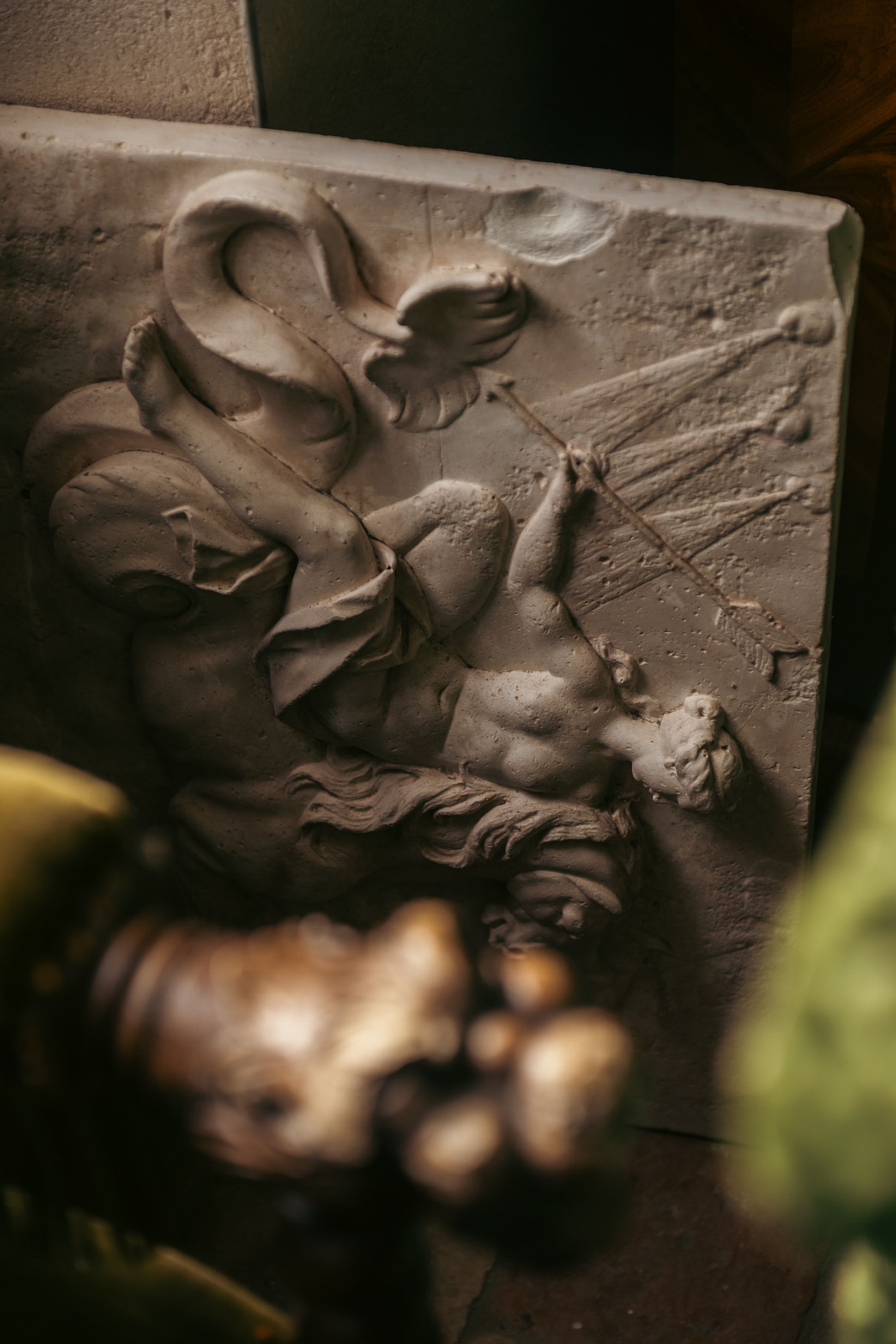
Throughout the history of the decorative arts, there have been countless wonderful objects, some extremely rare, others now lost, or surviving in only a handful of examples. What interests me is not copying them, but recapturing that spirit of invention and whimsy.
In this respect, I am particularly drawn to the figure of the marchand-mercier in the 18th century: someone with the freedom to take a material, a shape or a particular craft, reinterpret it and combine it with something else to create something entirely new. That is very much the spirit in which I envision Maison Wehrlé: highly decorative objects made from beautiful materials using genuine craftsmanship, informed by history but not confined to any particular period.
Ultimately, my first criterion is rather selfish: I want to create objects that I would be absolutely thrilled to discover at an antiques dealer’s and bring home myself. If I can inspire that same desire in others, then the venture will have succeeded.
TSF
What would your dream project be ?
Frantz
My dream would be to have an entire place to conceive and design, where the decorative scheme and the objects complement one another. A house or public space in which everything makes sense as a whole. And perhaps, one day, a place open to the public where people could see these objects in use — not simply look at them, but truly experience them.
TSF
Which places would you recommend for continuing our journey into the 18th century ?
Frantz
I always recommend taking a trip to Drouot. It is essentially a museum whose collections change every day, with the extraordinary difference that you can examine the objects at very close quarters, sometimes handle them and, potentially, even take one home! It is quite a unique place in the world.
I also love the Hôtel de la Marine. It is a magnificent place to rediscover the spirit of the 18th century, in an atmosphere that has been brilliantly recreated.